Product design. Global leadership. Hands-on craft.
I lead a global organization spanning design, research, analytics, and technical writing, drawing on twenty years of experience in enterprise B2B software.
I designed and built a functional app for commercial drivers. It brings daily priorities, route conditions, trip review, and AI-assisted coaching into one personal experience—giving the driver a way to understand their performance and act on it.
The manager application helps a coach understand fleet events, organize follow-up, and delegate work. This application serves the individual driver: what needs attention today, what happened on a trip, and what to work on next.
The design shifts the driver’s role from receiving coaching to participating in it, with personal feedback, space to explain an event, and a guided learning sequence.
Help drivers understand. Know when people need to step in.
Customer interviews about existing self-coaching programs reveal both the need for independent learning and its limits. These excerpts inform the app’s learning experience and the questions that still need evaluation.
01 / Customer insight
Reach drivers beyond the office
“A lot of drivers we can't reach them. They're over the road or they live too far so we can't reach them. When we first started, it was just Steve and I. So Steve had to cover over a thousand drivers probably, and I had to cover at that time probably over 300 as well. So we couldn't reach them. So that's why we needed something so we could have the driver self coach themselves.”
The app gives drivers a guided sequence of event reviews, learning modules, and feedback they can work through independently.
02 / Customer insight
Explain why the behavior matters
“I think the one of the bigger challenges with self coaching is first having the driver truly understand the behavior because if you've been doing it for so long and you don't understand that it's wrong… you feel truly what you're doing is right? So it kind of, it's a good thing to have them watch the video. Absolutely. But to coach the event out, what we probably saw from that is just still an influx and repeated behavior, because they don't understand why we feel this is wrong, why this should be corrected. They don't understand the why behind it.”
Behavior explanations and scenario questions connect the event to a learning point. Incorrect answers receive an explanation before the driver continues.
03 / Customer insight
Recognize behavior-specific limits
“The one we've seen with our DOT regulated fleet that we've noticed self coaching hasn't gone, hasn't worked very well is handheld device. They need a little push on that one. They need some in person on handheld device because we just see that that one doesn't improve unless there's a formal conversation.”
Jessica CranfordSafety and HR Consultant, Pine Bluff Sand and GravelRelated research: customer discussion of self-coaching.
Design consideration
Keep human coaching in the model
This feedback identifies a limit to independent learning. The driver experience sits alongside the manager application; self-coaching effectiveness needs to be evaluated by behavior.
04 / Customer insight
Respond when the behavior repeats
“I mean if somebody's going through the workflow and they just keep doing it, that's, you know, a face to face is going to have to happen. Right… there's something, you know, when you're sitting there in front of your manager having to explain, you know, this is, you know, I almost ran somebody over, you know, I'm falling a little too close. You know, I ran the fifth stop sign today. It hits a little bit differently because you got to explain it to somebody.”
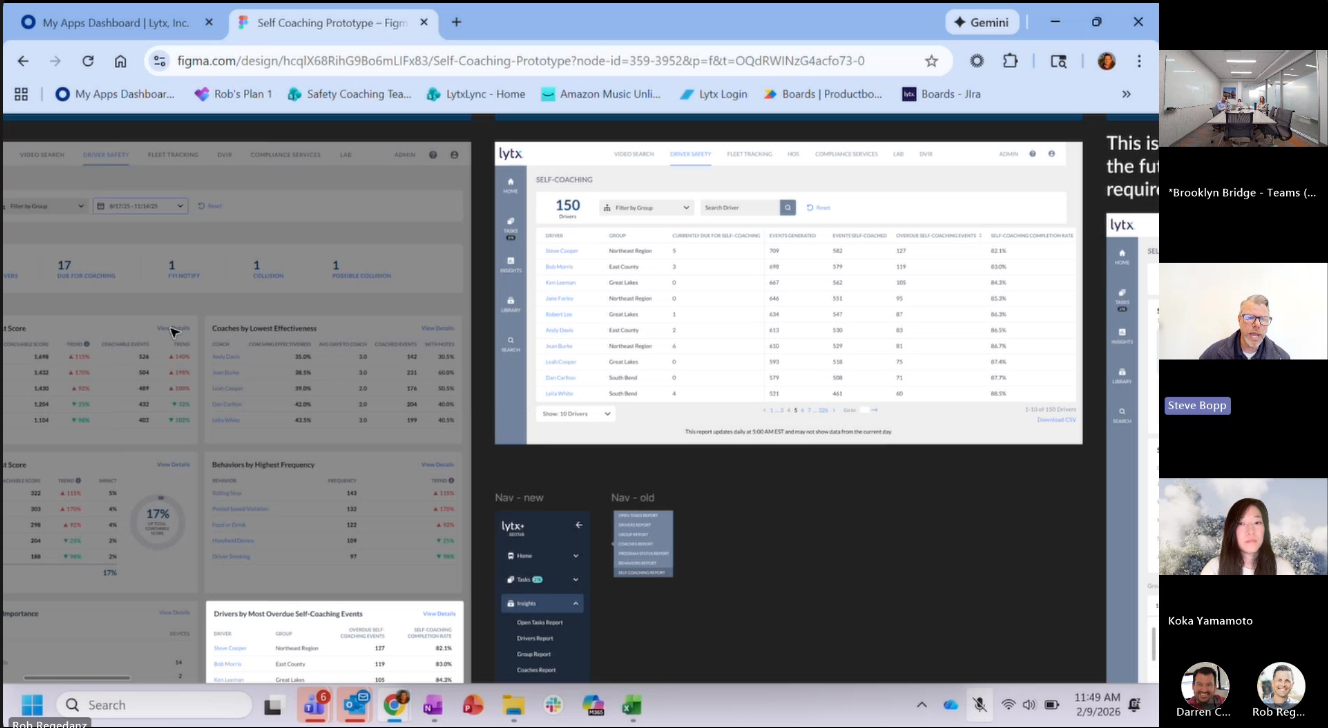
Steve BoppSafety Manager, Rottler Pest & Lawn SolutionsRelated research: self-coaching reporting concepts.
Evaluation priority
Look beyond session completion
The app shows behavior trends and progress, but completion alone does not establish improvement. Evaluation needs to examine repeated behavior and when manager follow-up is needed.
Customer interview excerpts about existing self-coaching programs, not validation of this app.
UX artifacts / Supporting work
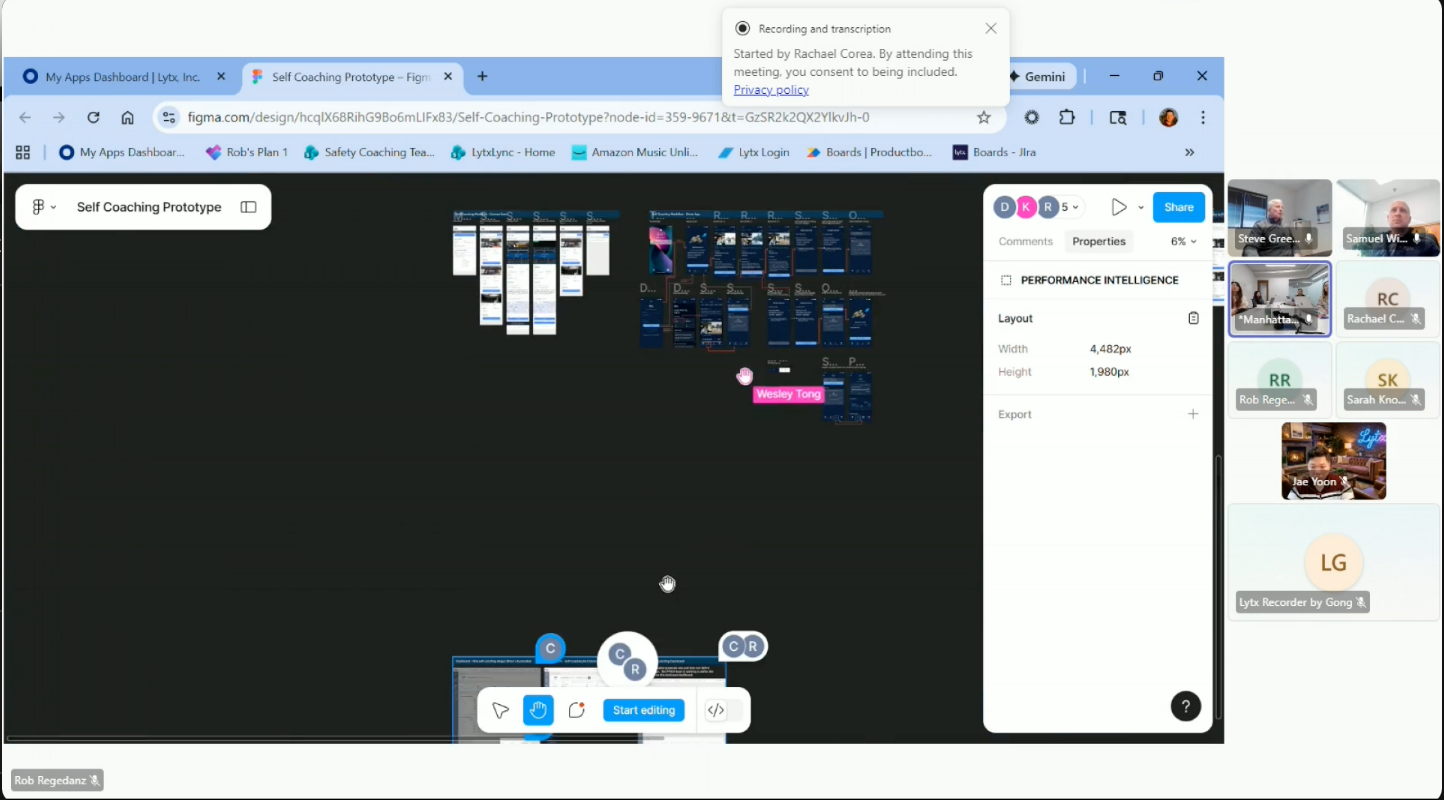
From event viewing to guided learning.
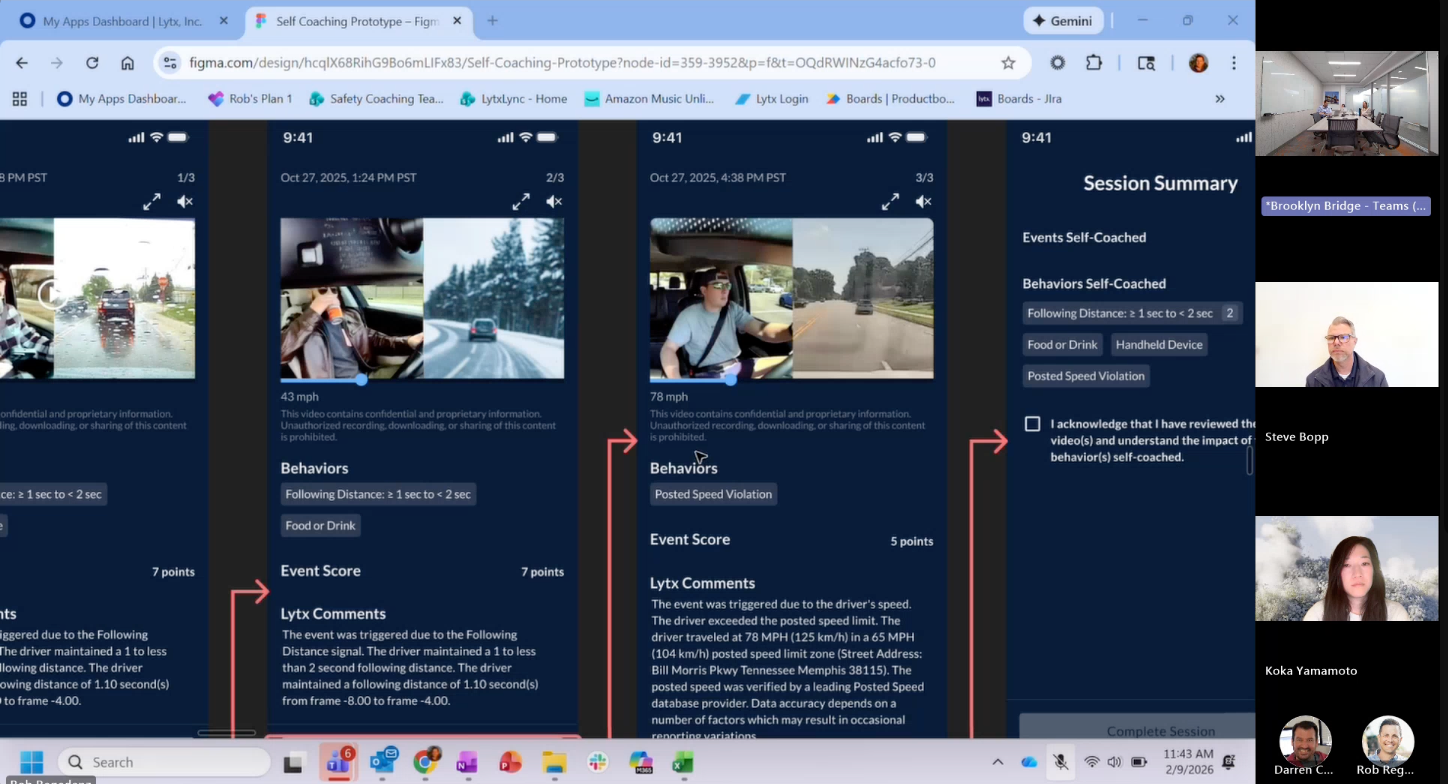
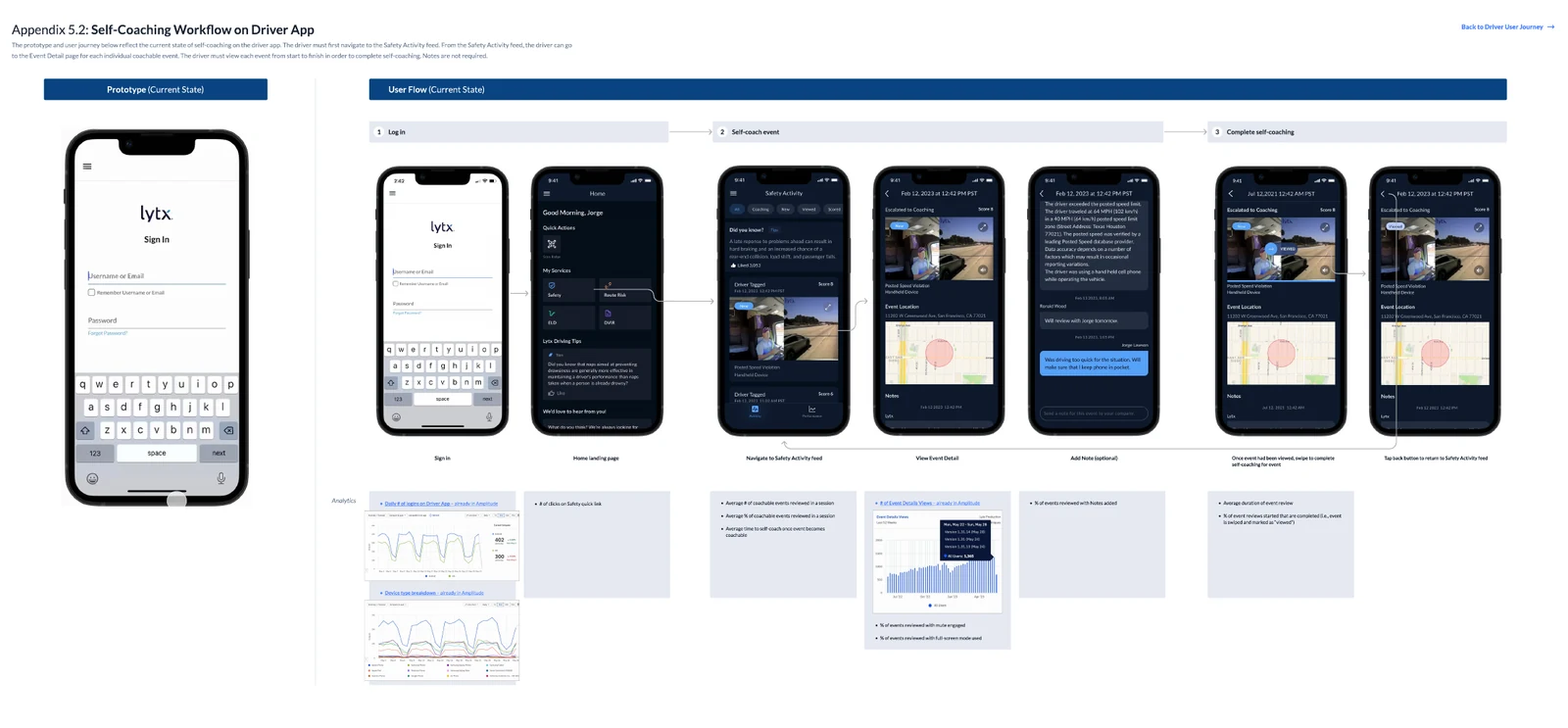
The earlier self-coaching flow required drivers to watch an event through to completion, with notes optional. Driver AI Assist adds behavior explanations, contextual conversation, and questions with feedback.
Historical workflow
Self-coaching in the driver app
The earlier app flow documents event review and completion, alongside proposed measures of engagement. It provides a concrete reference for the newer guided coaching experience.
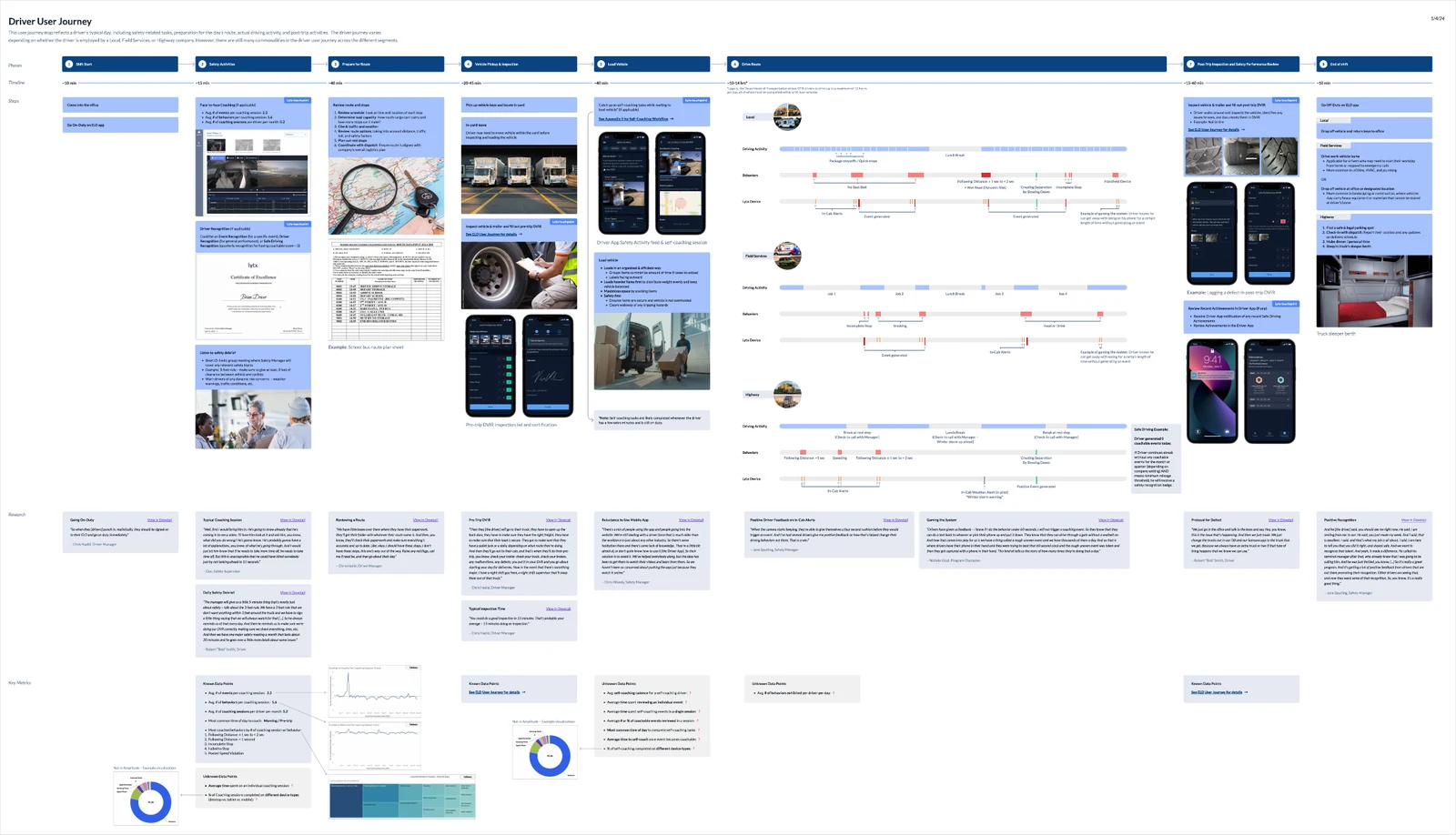
The working-day map places safety activities alongside preparation, routing, driving, and post-trip work. It gives context to the daily brief and route assistance shown in this app.
The driver moves from a daily brief to route risks and a trip-level explanation of performance.
A / PRIORITIES
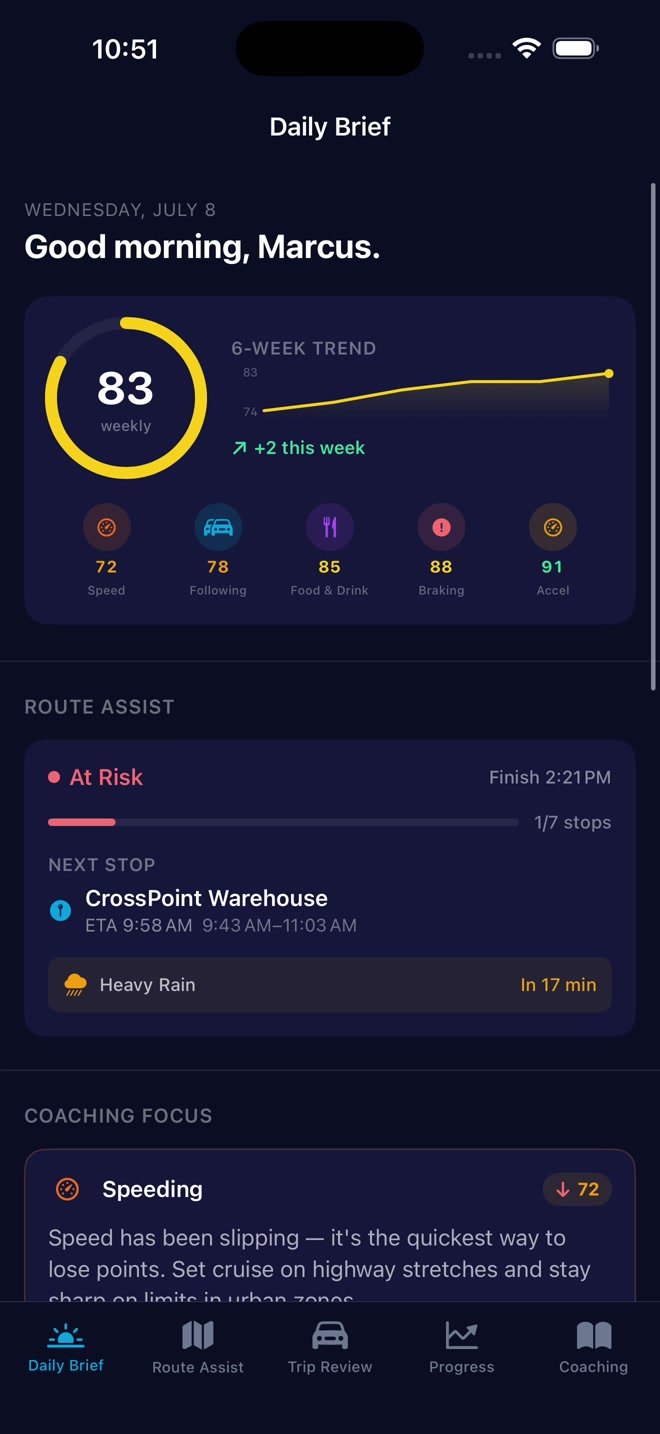
Start with a personal brief
A weekly score and behavior trends sit alongside the next stop and route conditions. Coaching focus areas turn performance feedback into specific daily priorities.
B / ROUTE CONTEXT
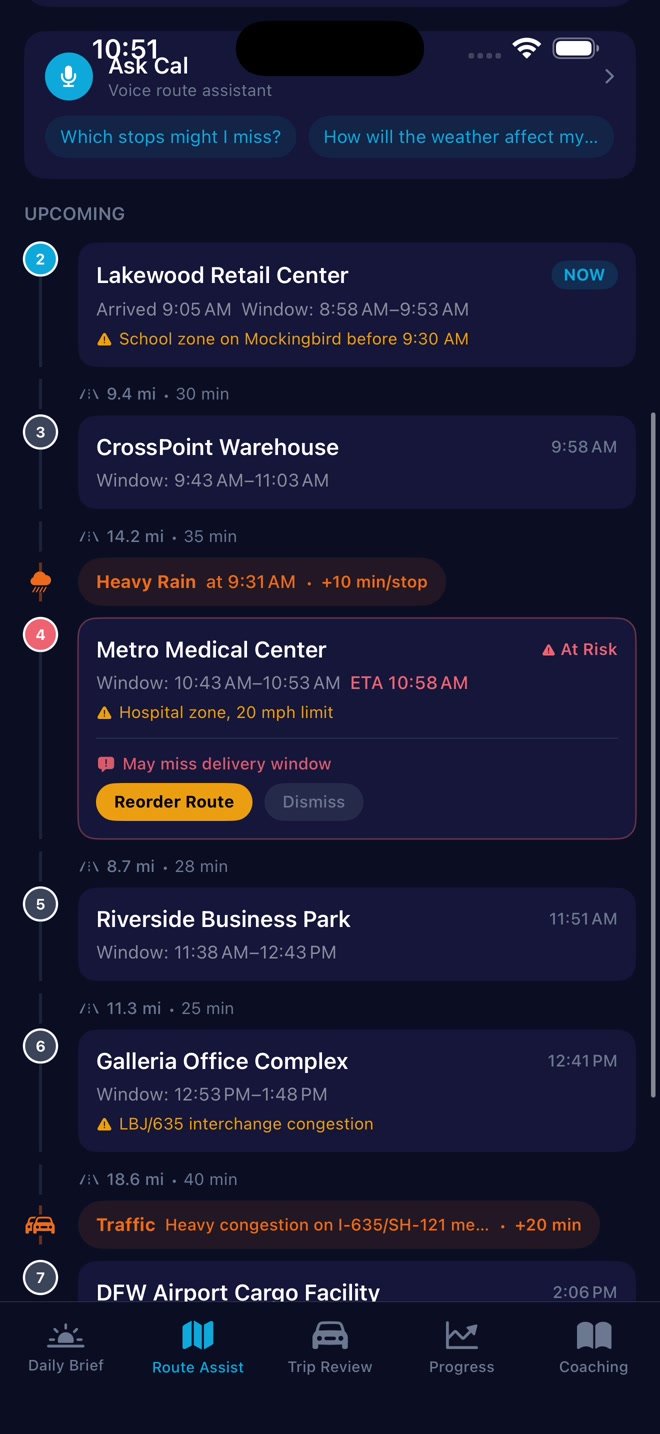
See risks to the schedule
Route Assist combines stop windows, weather, traffic, and location-specific alerts. A delivery at risk exposes a route-reordering action directly in context.
C / TRIP CONTEXT
Understand the event
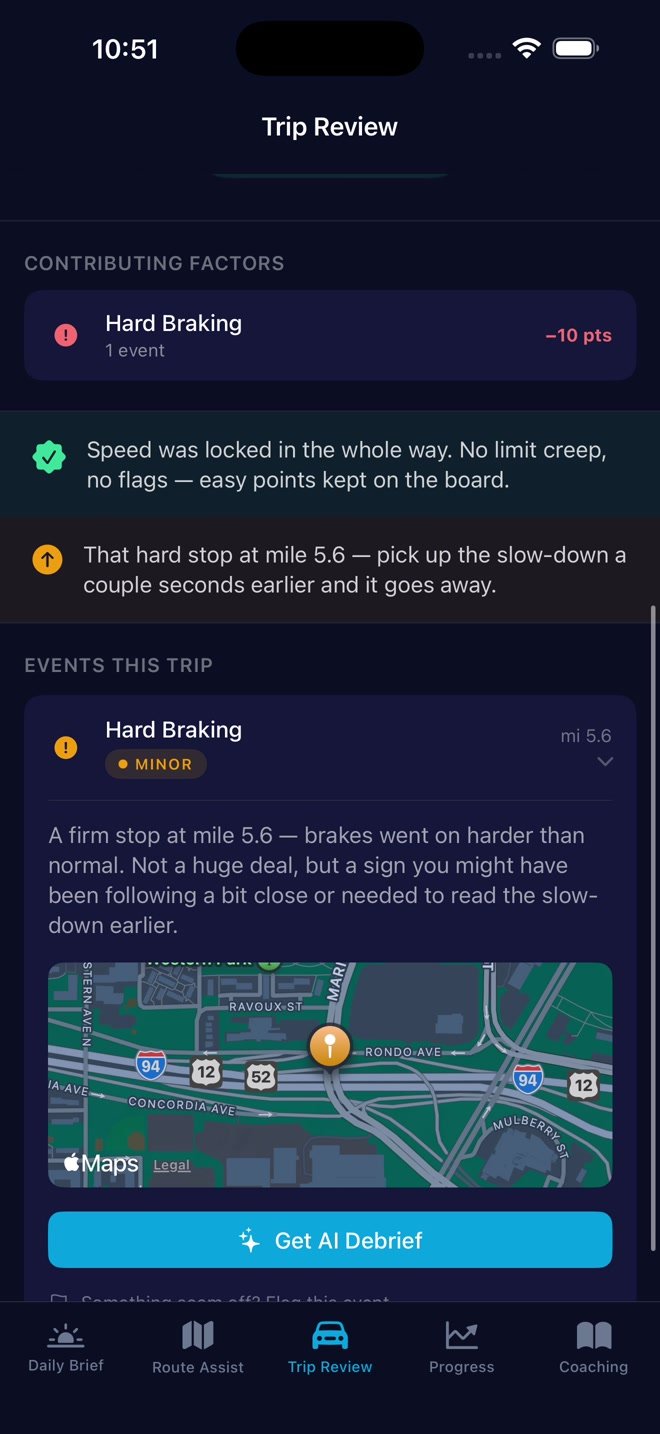
Trip Review explains the score through contributing behaviors. Expanding a hard-braking event reveals its location, a plain-language description, and an entry point to an AI debrief.
04 / Conversation
Give the driver a voice in the review.
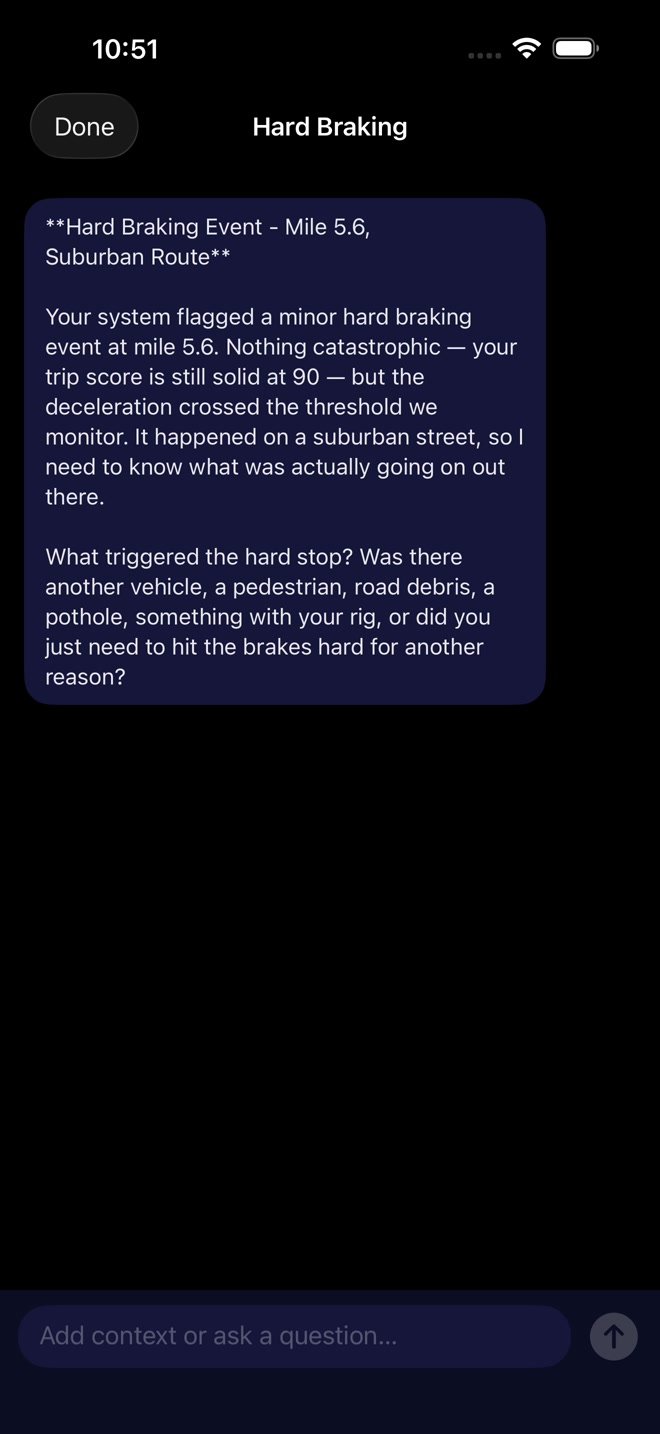
The AI debrief opens with the specific event and asks what caused the hard stop. The driver can add context or ask a question within the review.
Ask for context
The prompt names the event, trip location, and score, then asks about possible causes. That makes the conversation about the driver’s situation.
Keep the exchange relevant
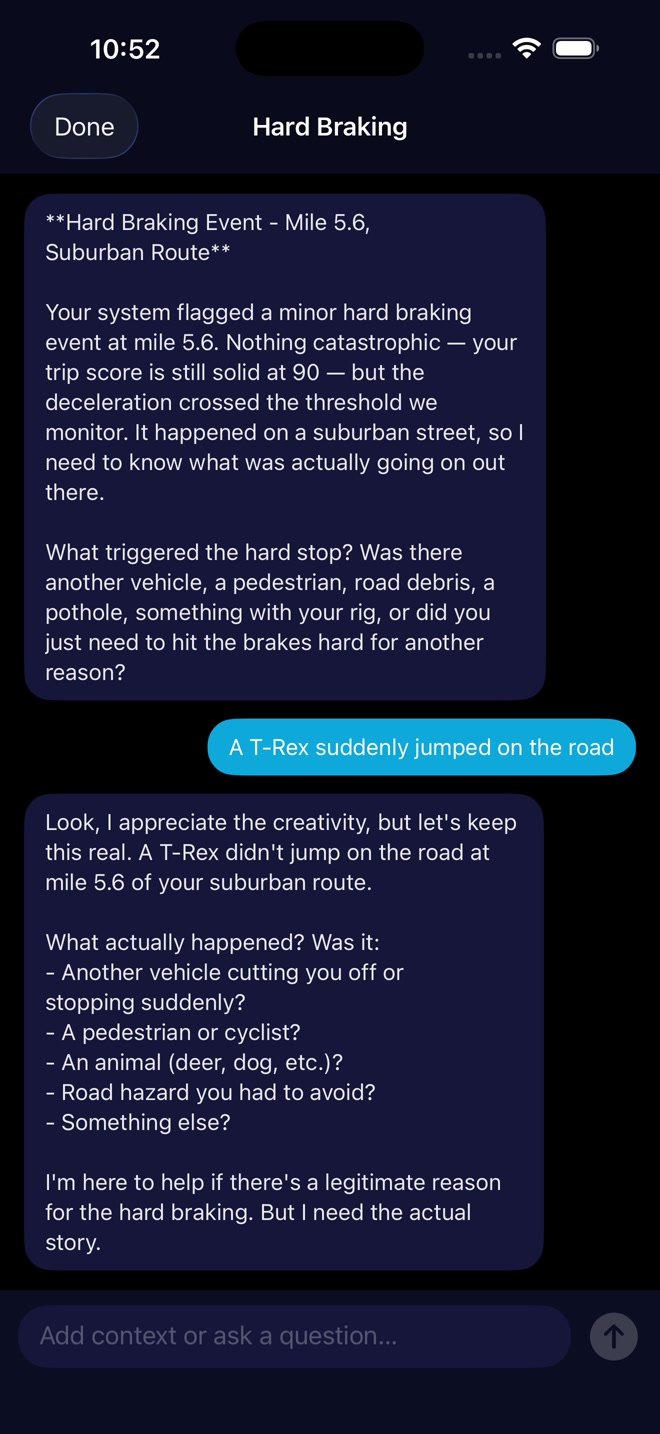
In the recorded test, the driver enters a deliberately fictional explanation. The assistant challenges it and asks for the actual circumstances. This shows the intended conversational behavior in that exchange.
Event-specific context before the driver responds.A test response prompts a request for factual context.
05 / Improvement
Connect feedback to the next action.
Progress tracking and event-based coaching carry the experience beyond a single score.
A / PROGRESS
Make improvement visible
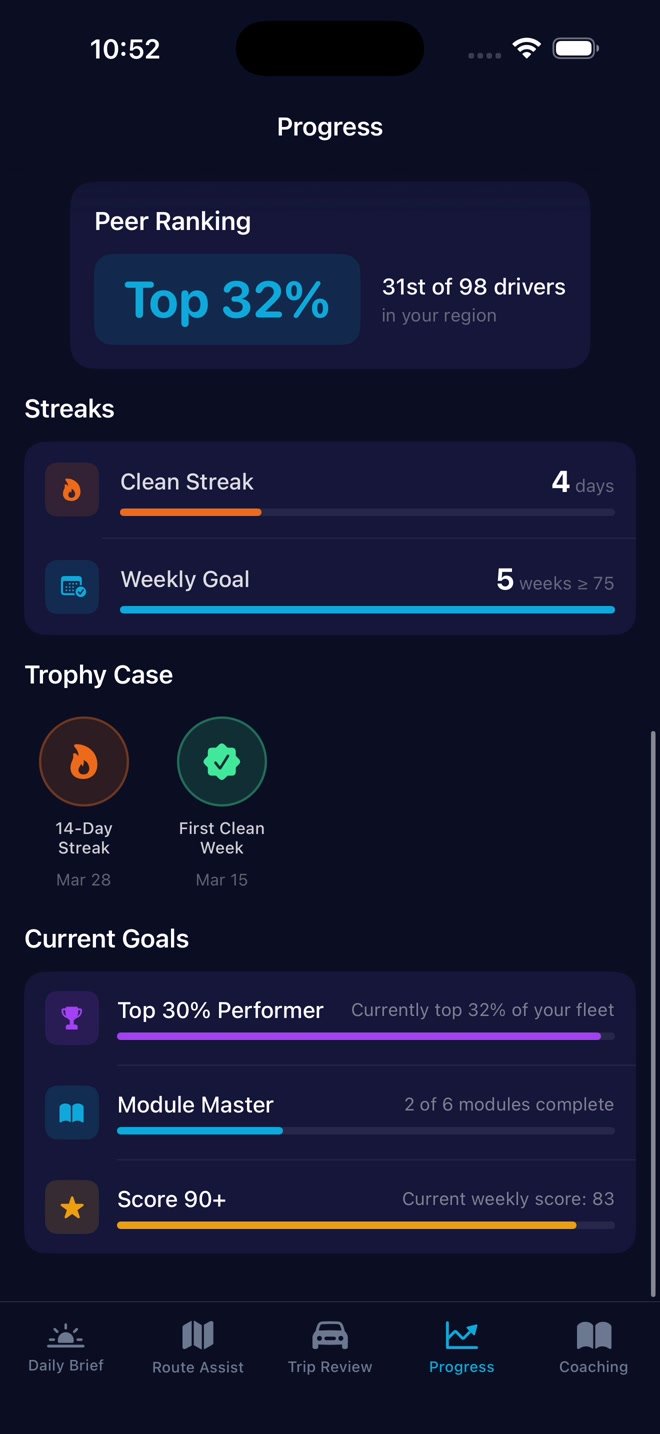
Behavior breakdowns and trends are paired with peer standing, streaks, and goals. The driver can track progress over time and see the next target.
B / COACHING
Review a specific behavior
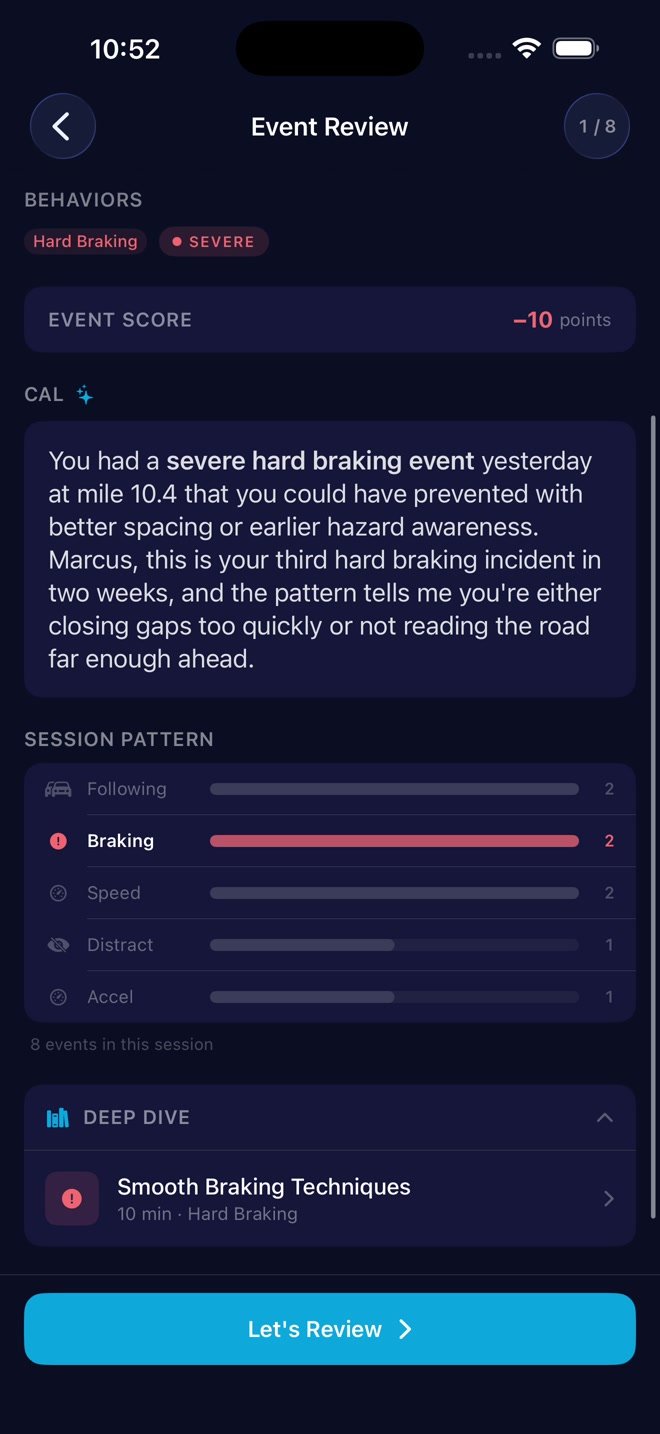
Coaching organizes focus areas into an event review sequence. Each review pairs a behavior explanation with the session pattern and a related learning module. The interface also offers an event-dispute option.
C / FEEDBACK
Explain the answer
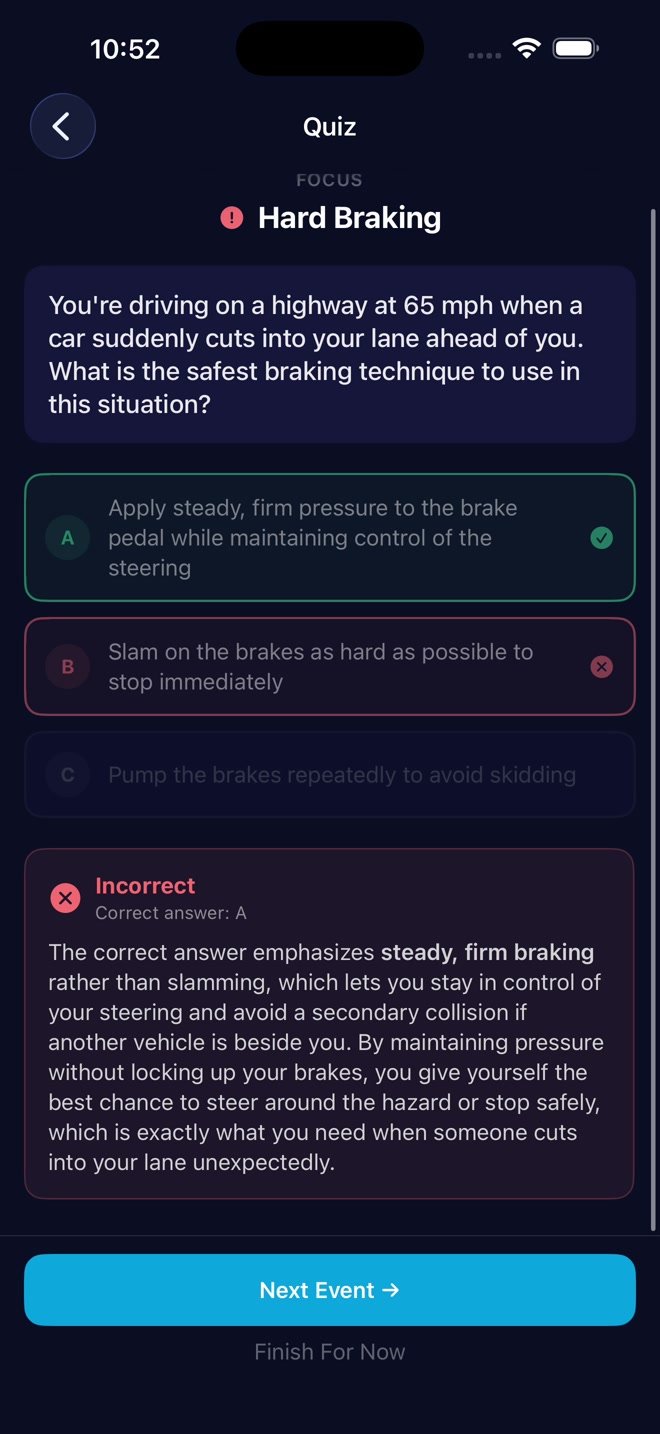
A scenario question checks the driver’s understanding. After an incorrect choice, the app identifies the correct answer and explains the reasoning before offering the next event.
06 / Product design
Designing across both sides of coaching
A / Product model
A distinct driver workflow
The driver’s experience centers on daily work and personal progress. The manager’s experience centers on fleet oversight and follow-up.
B / Interaction model
Context before conversation
Scores lead to specific behaviors and events. AI conversations begin inside that context, with an opportunity for the driver to respond.
C / Learning model
Feedback with a next step
Performance trends, event reviews, and explained quiz feedback connect observation to a concrete action the driver can take.
07 / Overview
Driver AI Assist overview
A downloadable summary of the driver workflow, AI debrief, and coaching experience, illustrated with frames from the demonstration.