Customer feedback
Control the layout
“I’d love to drag that over and basically customize it.”
The participant wanted to change the number of drivers shown and the space given to that information.

Based in Snohomish, WA
Platform investment / Lytx
Lighthouse makes the case for customizable dashboards on the main Lytx platform, using customer needs to define the proposed investment.
The proposal connects a configurable workspace to the tasks a fleet manager needs to complete. The UX team’s concepts show how dashboard information could lead into review and coaching.
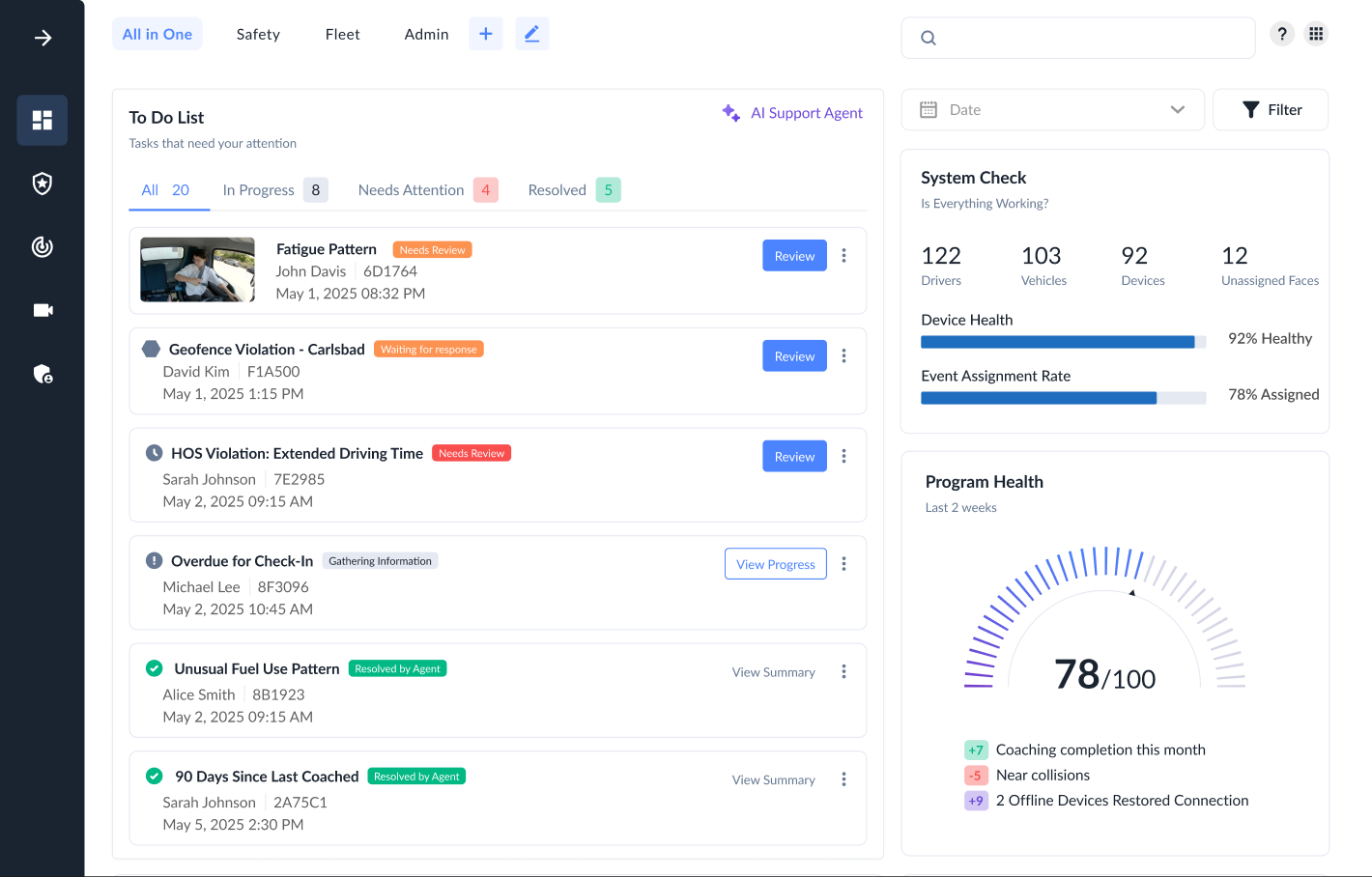
01 / Investment case
Customer feedback described fixed layouts that did not match individual responsibilities. Research also recorded customers moving between product tabs or preparing custom reports outside the platform.
That evidence gave the business case a specific problem to address: let customers choose the information they need and act on it in the same workspace.
Customer feedback
“I’d love to drag that over and basically customize it.”
The participant wanted to change the number of drivers shown and the space given to that information.
Existing reporting effort
“I spend probably five to eight hours customizing it.”
This describes effort in an existing workflow. The research does not establish time saved by Lighthouse.
The business case also used win/loss data as commercial context. It did not isolate dashboards as a cause of lost deals. The competitive review compared customization, sharing, and data coverage available at the time.
02 / Experience
The proposal gives new users an All in One starting view. Dedicated Safety, Fleet, and Admin dashboards offer a narrower focus. Experienced users could build their own dashboards from the same module library.
Edit mode exposes the choices directly: name the dashboard, select a group, choose KPIs and widgets, then arrange and save the layout. Shared views and administrator-set defaults were part of the proposed scope.
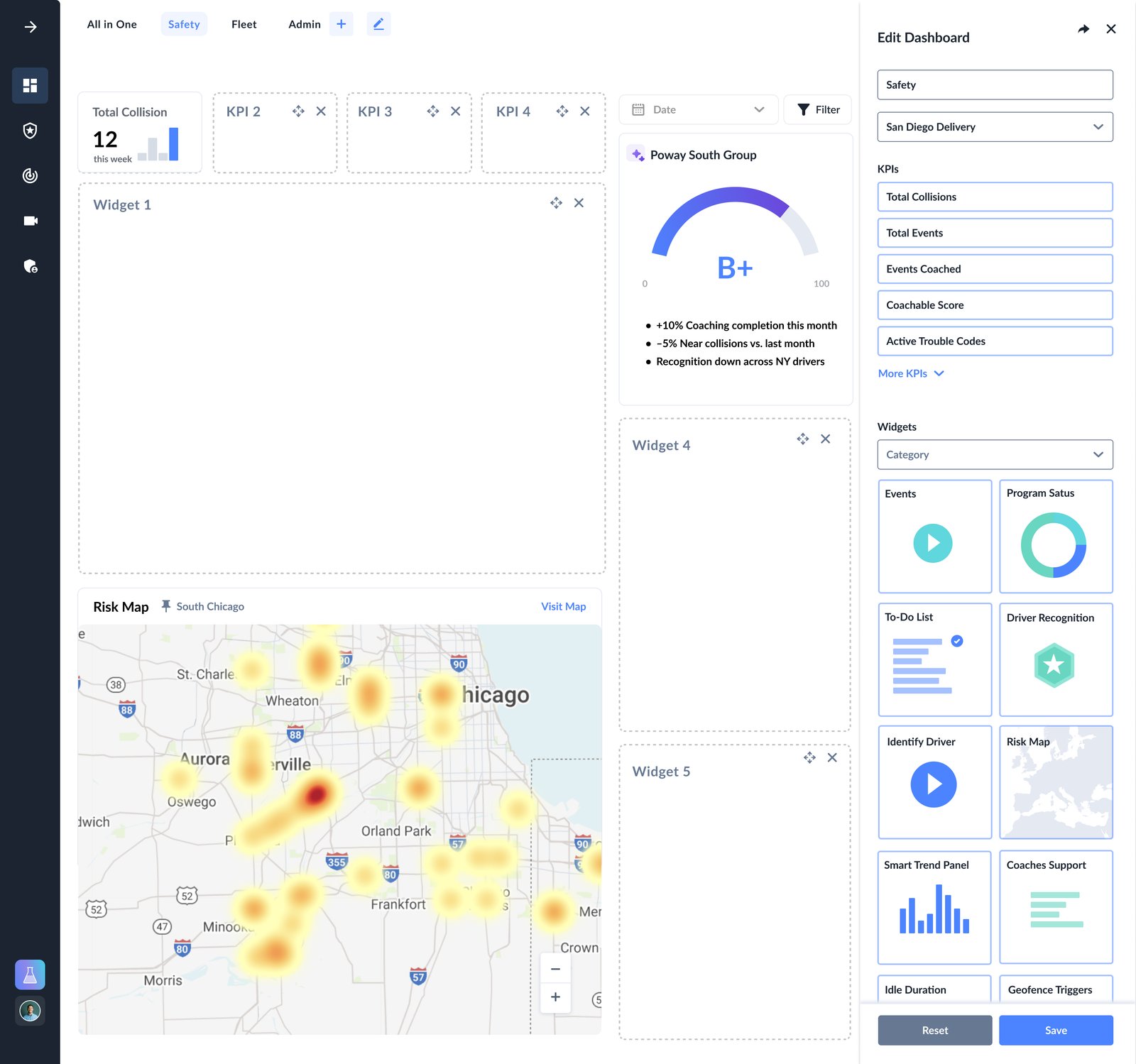
03 / Information to action
The concepts use a fatigue alert to show what happens after a manager notices a problem. Review opens the supporting evidence, with options to contact a coach or create a coaching session.
AI-assisted pattern detection is part of the proposed experience. These screens demonstrate the intended workflow, without establishing detection accuracy or coaching outcomes.
A / Review
The review brings events from multiple days together with video stills, route context, and a timeline. The manager can examine the evidence before deciding how to follow up.
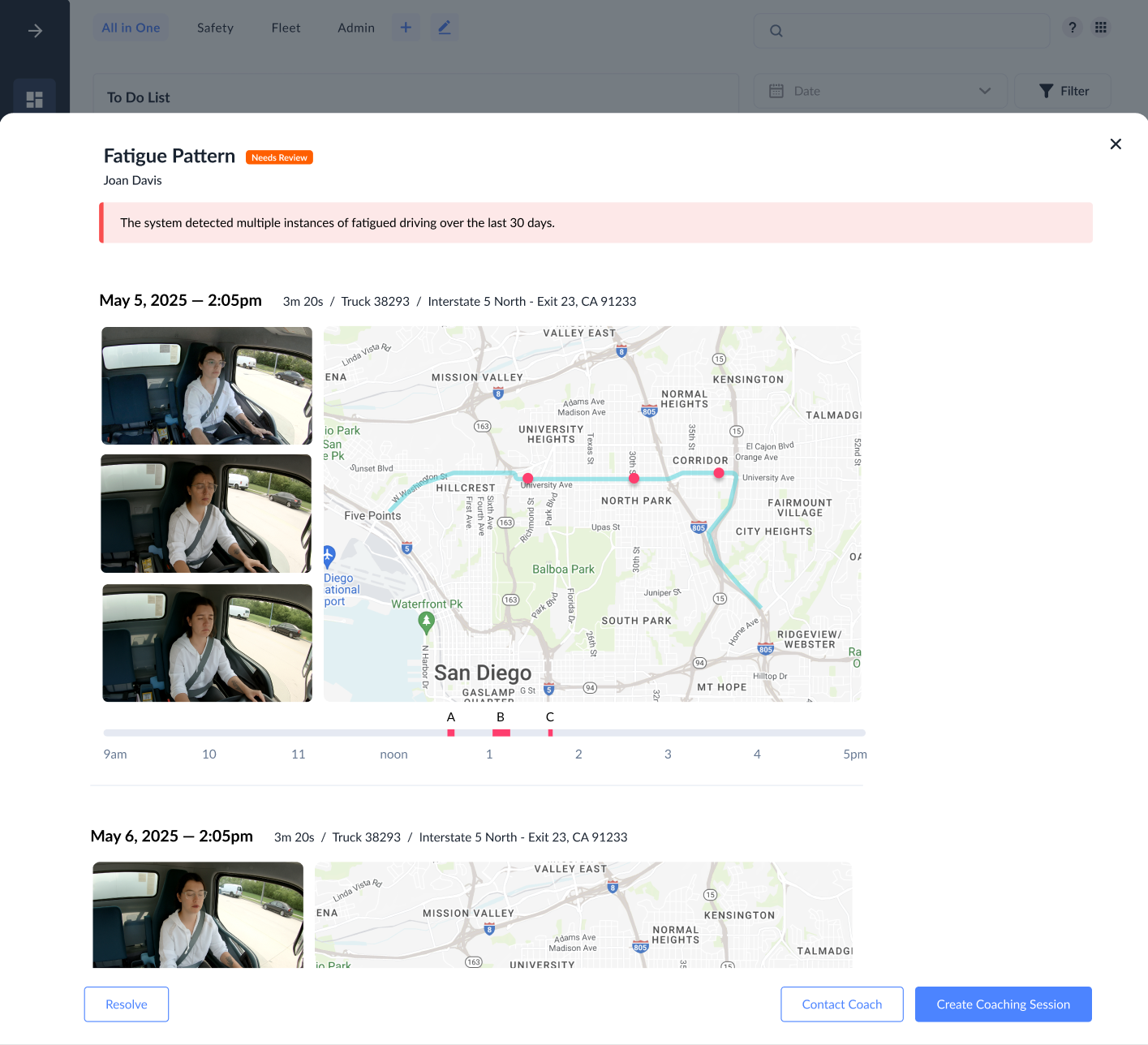
B / Coordinate
When a conversation is needed, the contact view keeps the fatigue topic attached to the exchange. Driver information and recent behavior data appear beside it.
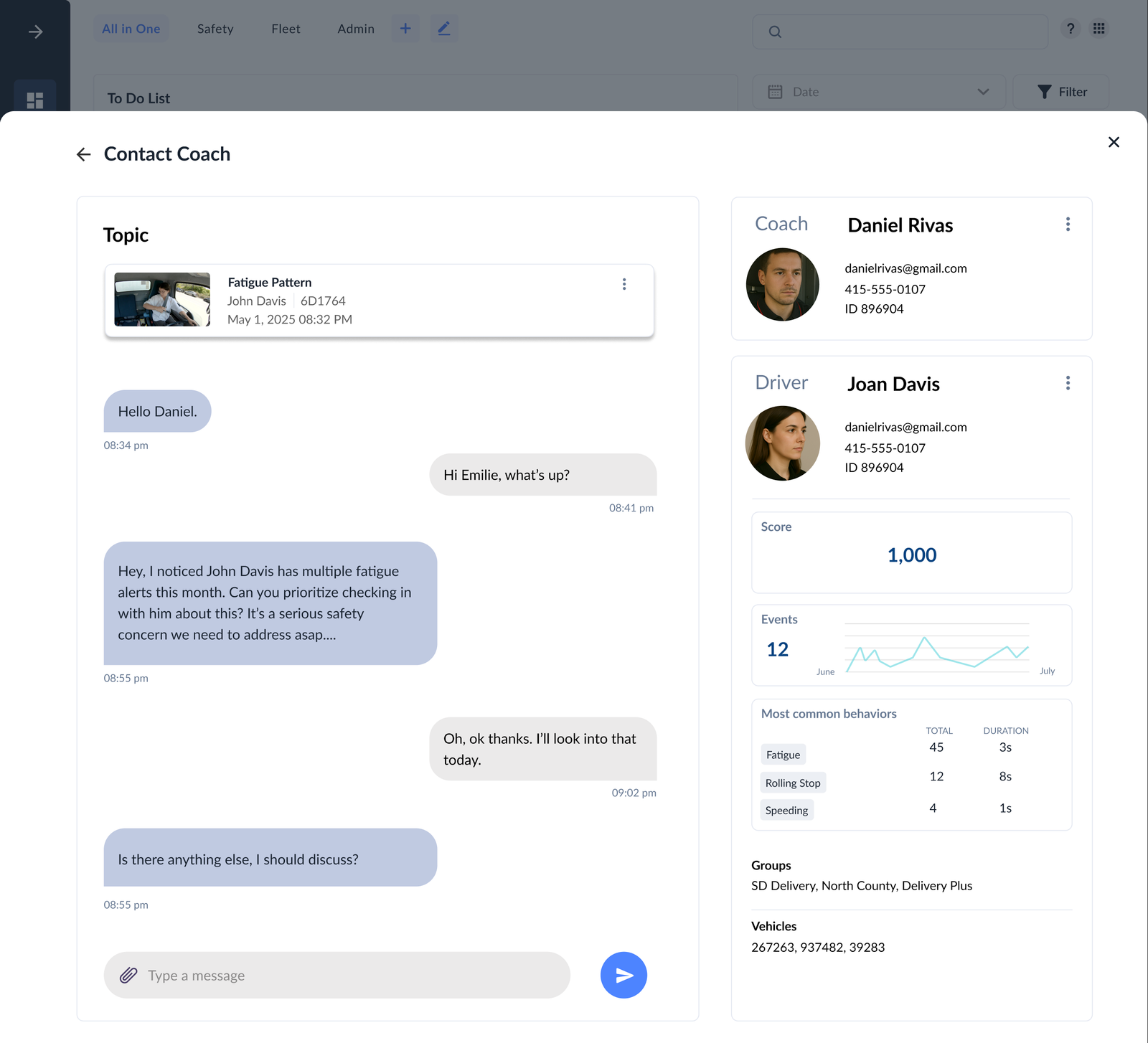
C / Assign
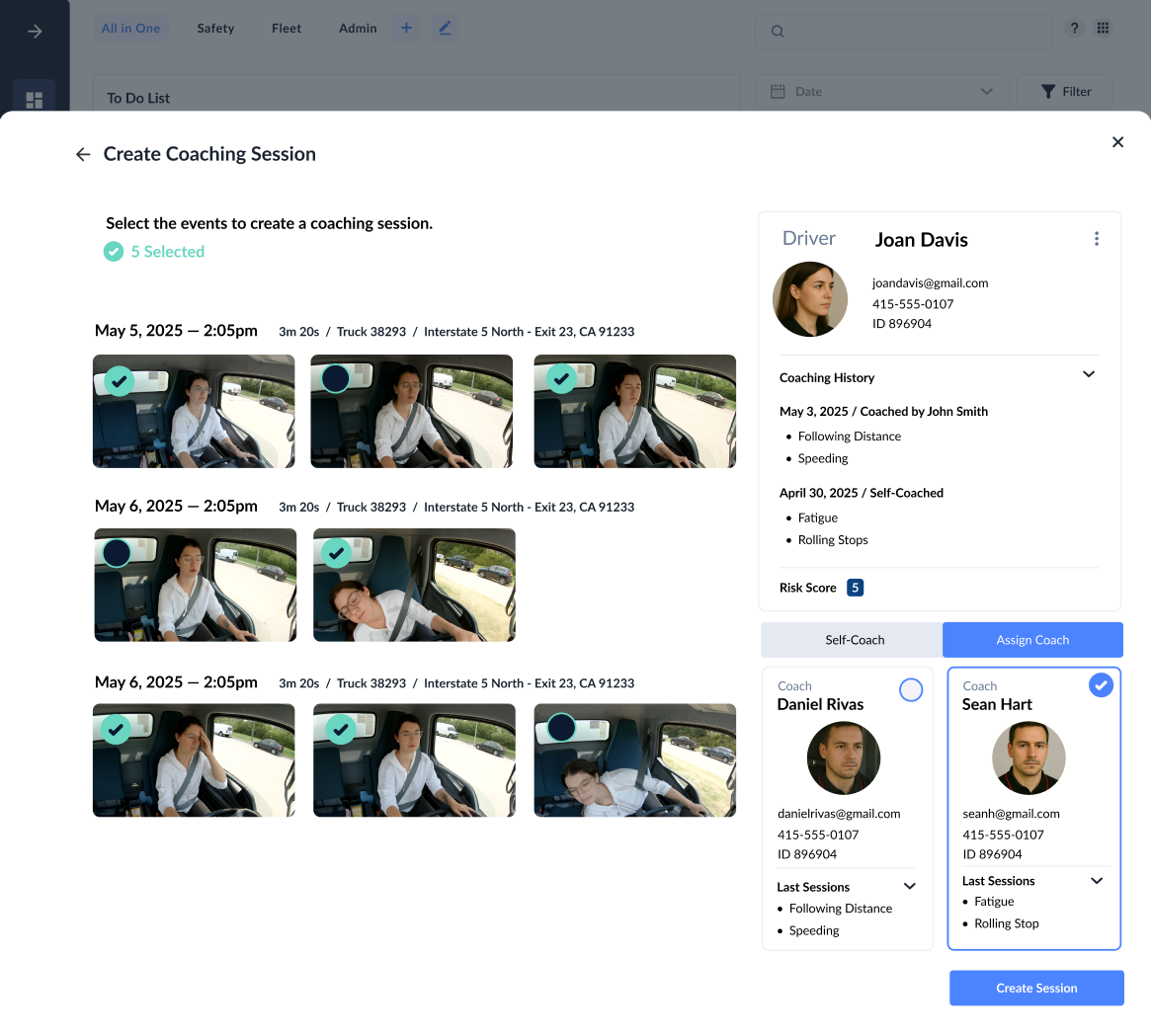
The session view lets a manager select relevant events and review coaching history. The design offers self-coaching or an assigned coach before the session is created.
04 / Investment sequence
The proposal starts with a common front-end codebase and an API-fed widget architecture. New and refreshed pages would use those modules, so work on one page could extend the library available to dashboards.
Defaults provide a starting experience while customization adds control for established users. The plan then extends to sharing and administrator permissions. Reduced engineering effort and faster onboarding were reasons to invest, with benefits still to be measured.
The proposal grouped the work into four estimated quarters. This is the original planning sequence. The current delivery target is recorded below.
Common codebase, page structure, widget architecture, and data connections.
Proposed staffing: UX Engineering and one sprint team.
Default modules, notifications, and dashboard templates. Proposed AI prioritization and task automation.
Proposed staffing: UX Engineering, two sprint teams, and Labs.
Extend module reuse across pages and let advanced users compose dashboards from the library.
Proposed staffing: UX Engineering and two sprint teams.
Share custom dashboards and let administrators set default views for users.
Proposed staffing: UX Engineering and one sprint team.
05 / Current status
Development recently started, with delivery targeted for the end of Q1 2027. The customer and business evidence on this page explains the investment case. The screens and phased plan document the proposal.
Delivery and measured outcomes remain pending.
The earlier Next-generation Lytx UI case study covers my navigation design work. Lighthouse addresses the dashboard investment separately.