Persona
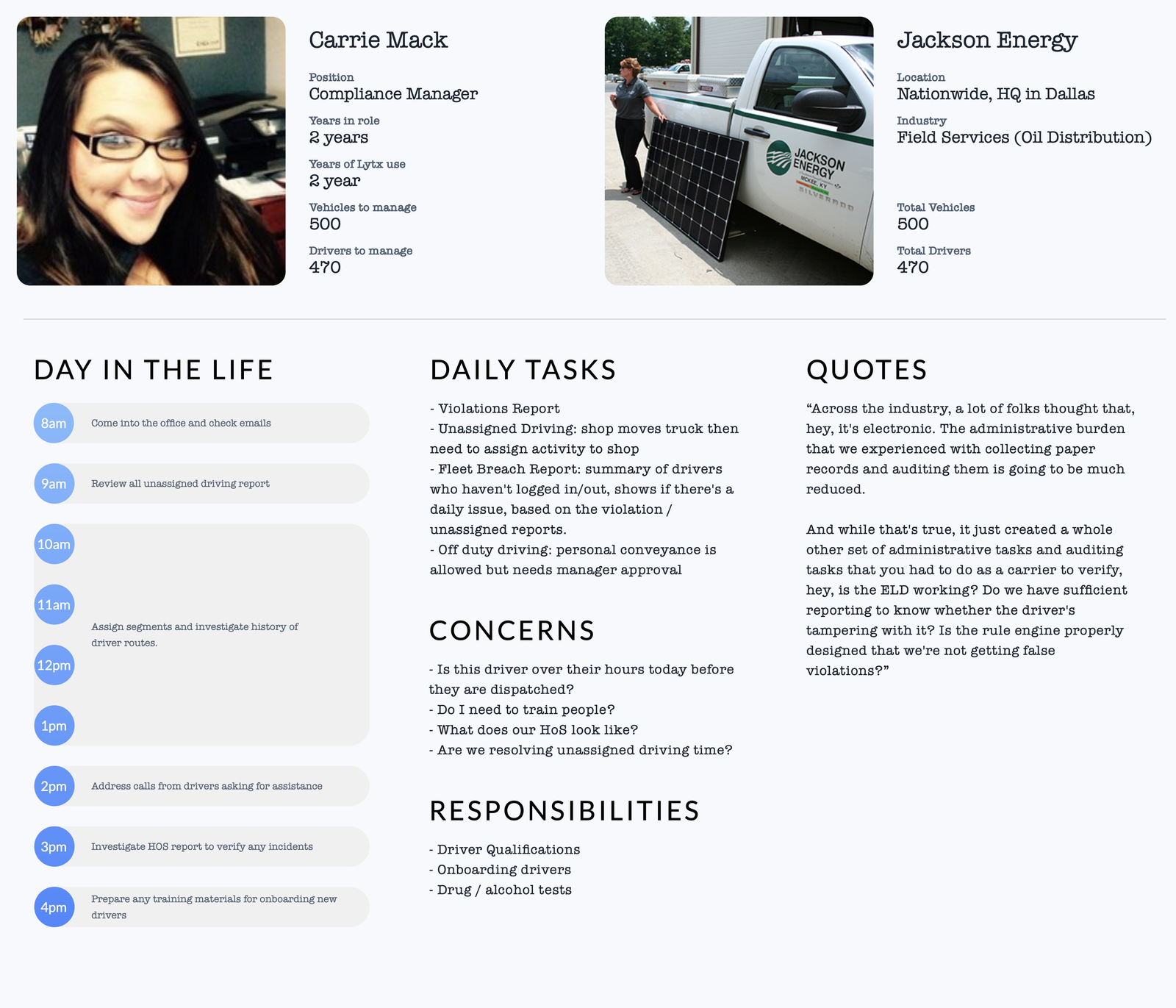
Compliance manager
A role-specific view of auditing, reporting, and driver support extends the research coverage beyond the primary coach and fleet manager.
Based in Snohomish, WA
Product design.
Global leadership.
Hands-on craft.
I lead a global organization spanning design, research, analytics, and technical writing, drawing on twenty years of experience in enterprise B2B software.
Organization design & leadership
Integrating a global team at Lytx across design, research, analytics, and technical writing, with shared practices that support collaboration and growth.
My work connects people across the US, India, and Israel through hiring, mentorship, shared research practices, and working software as the prototyping standard.
01 / Global team
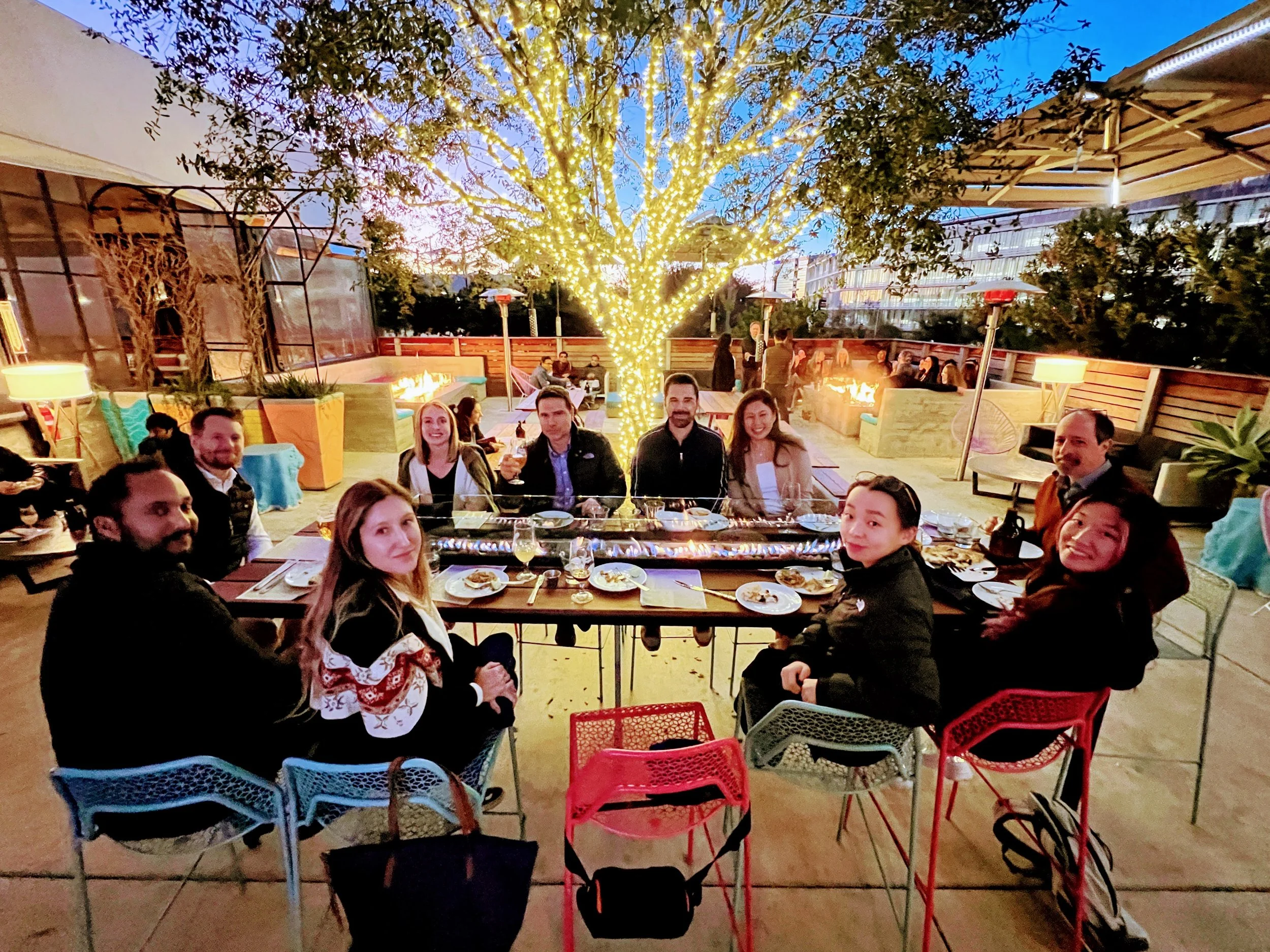
I hired every current designer on the team and grew the organization from 3 to 15+ across the US, India, and Israel. Shared ownership, clear expectations, and common practices supported integration across locations.
I established the Bangalore team in person and connected it to the wider organization through hiring, mentorship, and critique practices that supported the growing global team.
This earlier map shows how design worked across product and engineering groups. It documents a previous structure; the current team scope is summarized above.
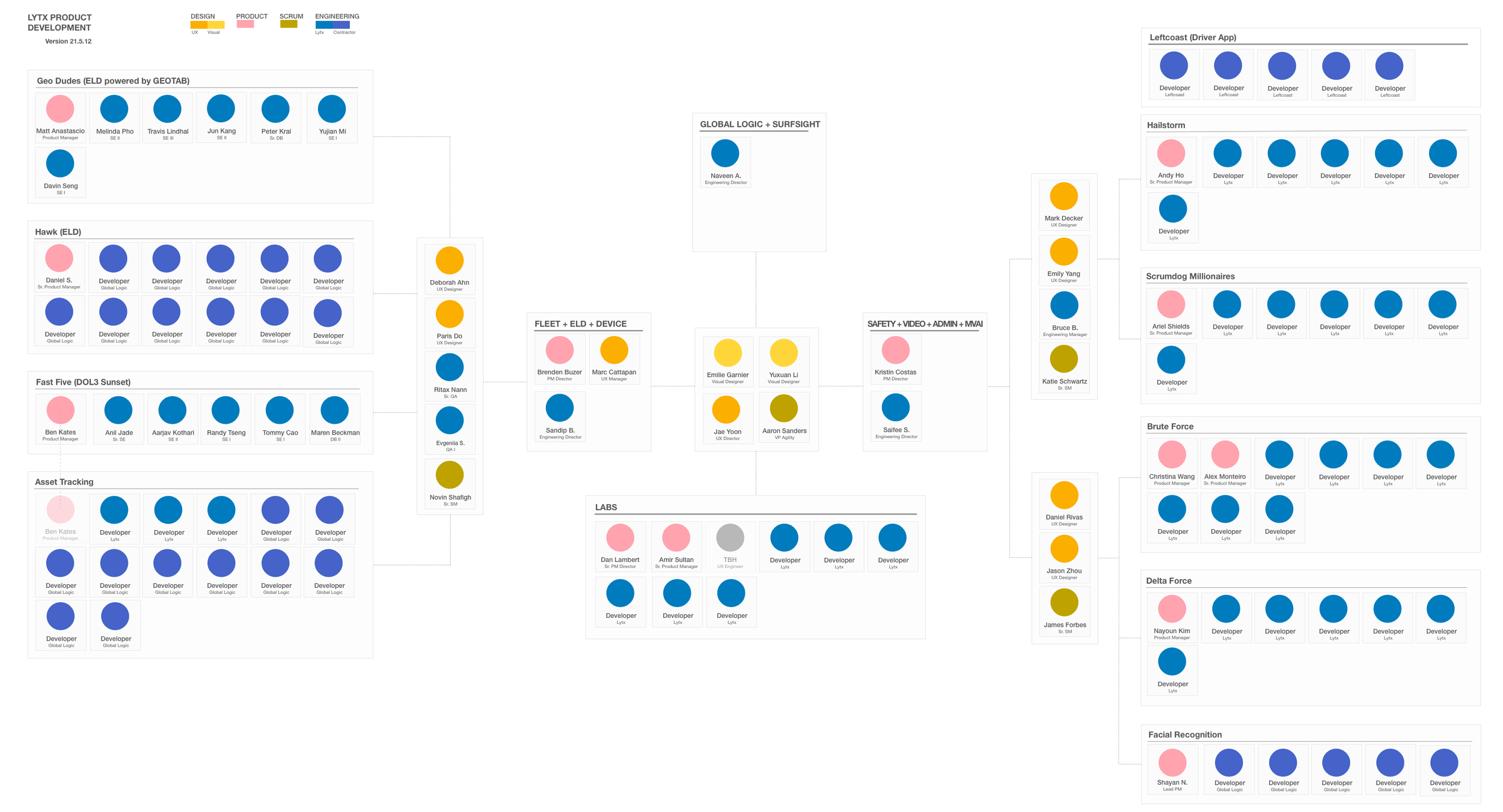
Earlier product-development organization map.
View full-size organization map02 / Hiring
I built a structured approach to evaluating designers. The scorecard makes the discussion specific: how a candidate understands the user, frames the problem, develops a solution, and responds to questions.
The scorecard and exercise shown here are examples from my earlier hiring process.
View the interview exercise ↗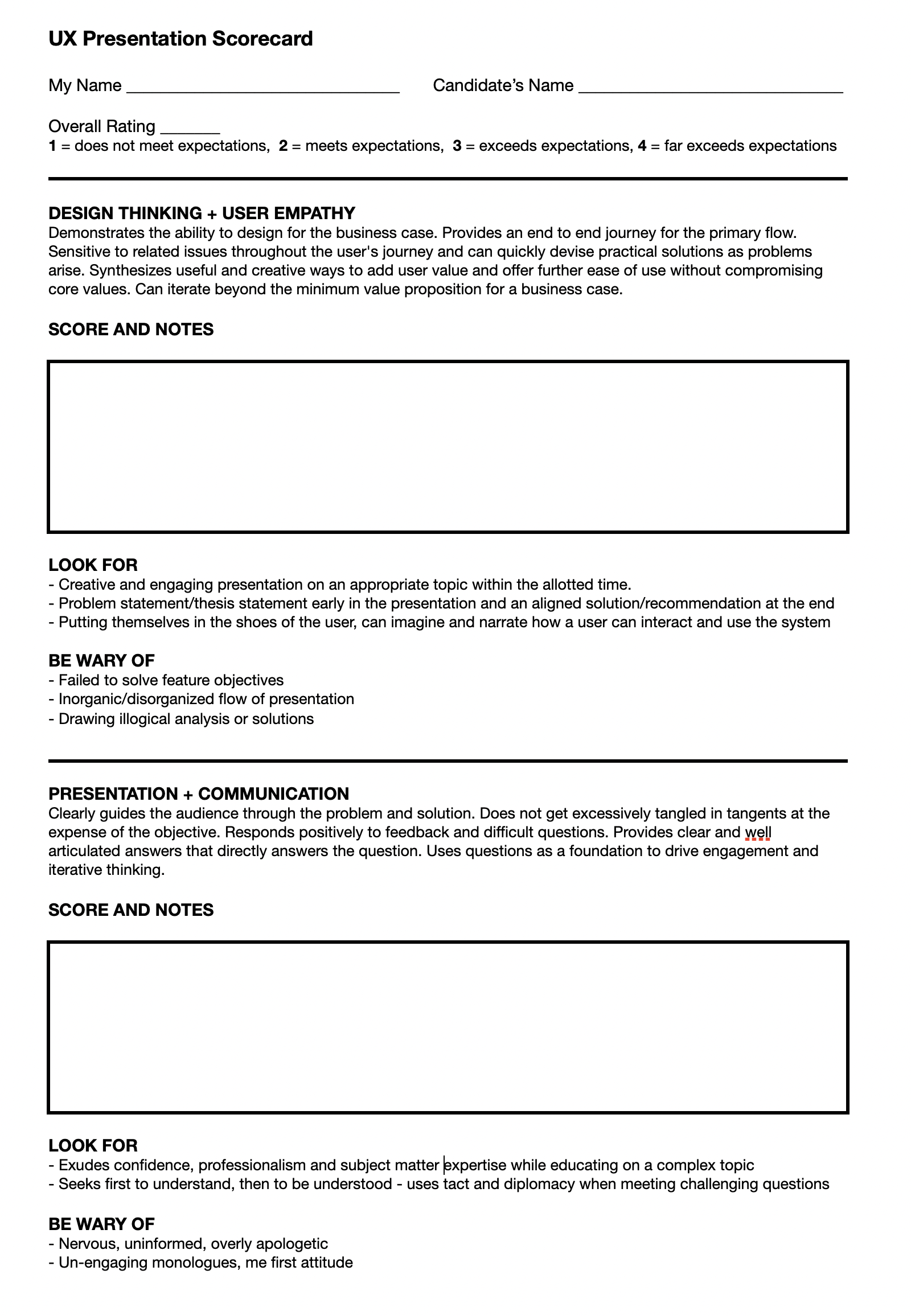
A shared scorecard for evaluating design thinking and communication.
Read the full scorecard03 / Team practices
The handbook gave the global team a shared reference for product coverage, roles, and expectations. Onboarding guides helped new designers join the team with a common understanding of its processes and context.
Recorded walkthroughs and asynchronous communication connected work across locations. Alongside mentorship and critique, these materials helped integrate new colleagues into the team’s day-to-day practice.
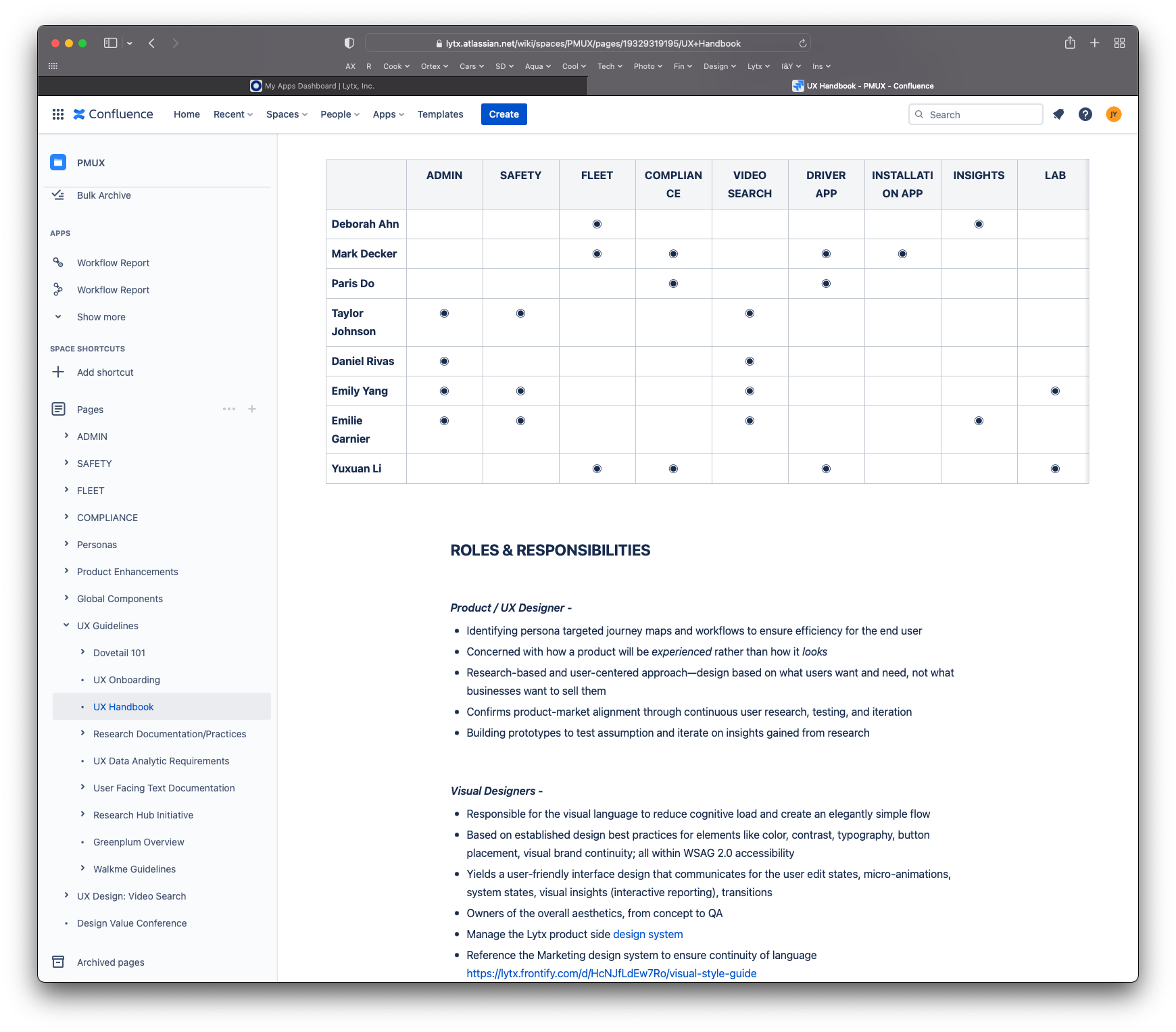
The earlier handbook paired product ownership with explicit role expectations.
Read the handbook example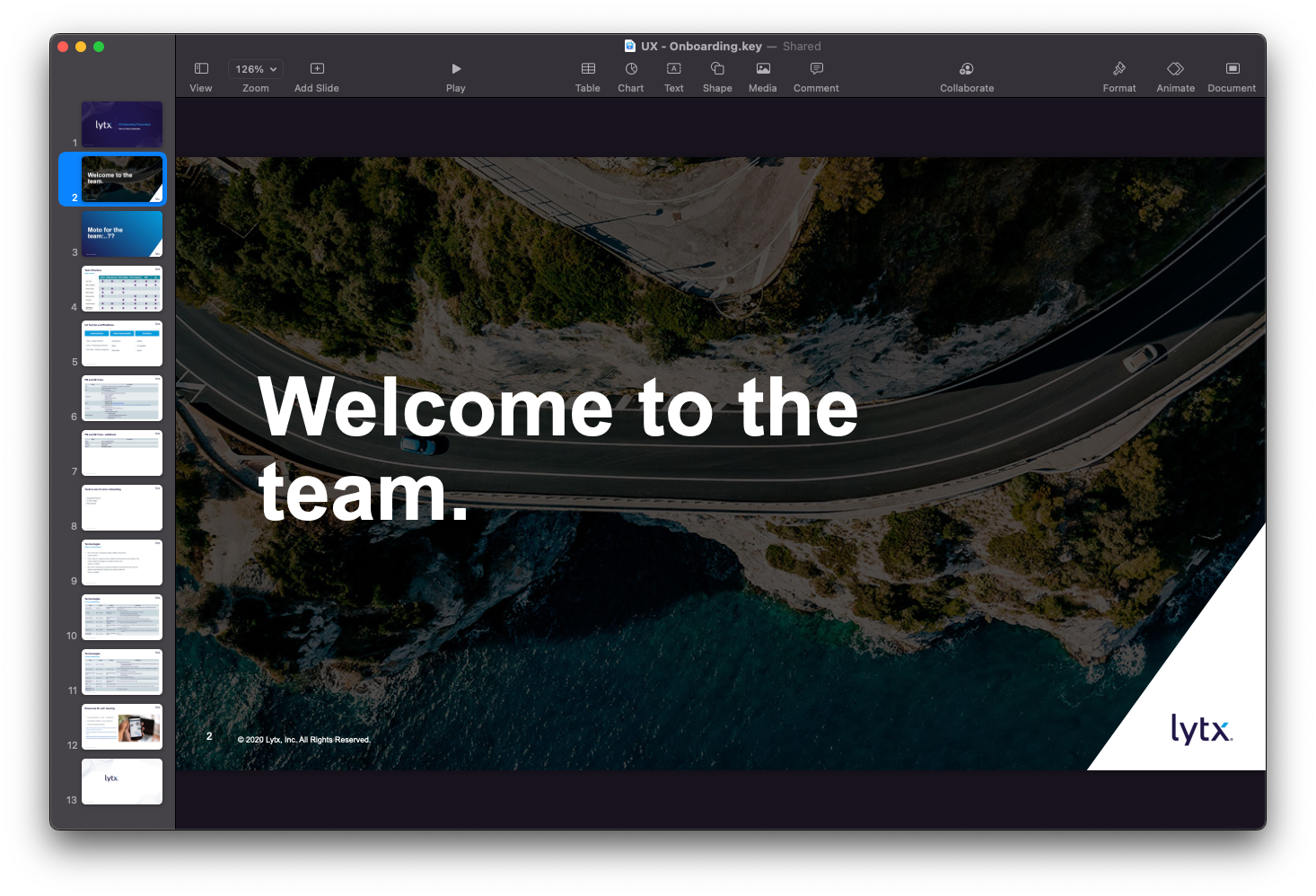
An onboarding guide from the earlier team practice.
View the onboarding example04 / Research
My research practice combined direct observation, usability testing, and a shared repository. Fieldwork provided context for how customers operated; the repository organized findings so product partners could revisit the evidence behind design decisions.
These earlier artifacts show the shared research foundation that preceded the broader Product Experience & Insights organization.
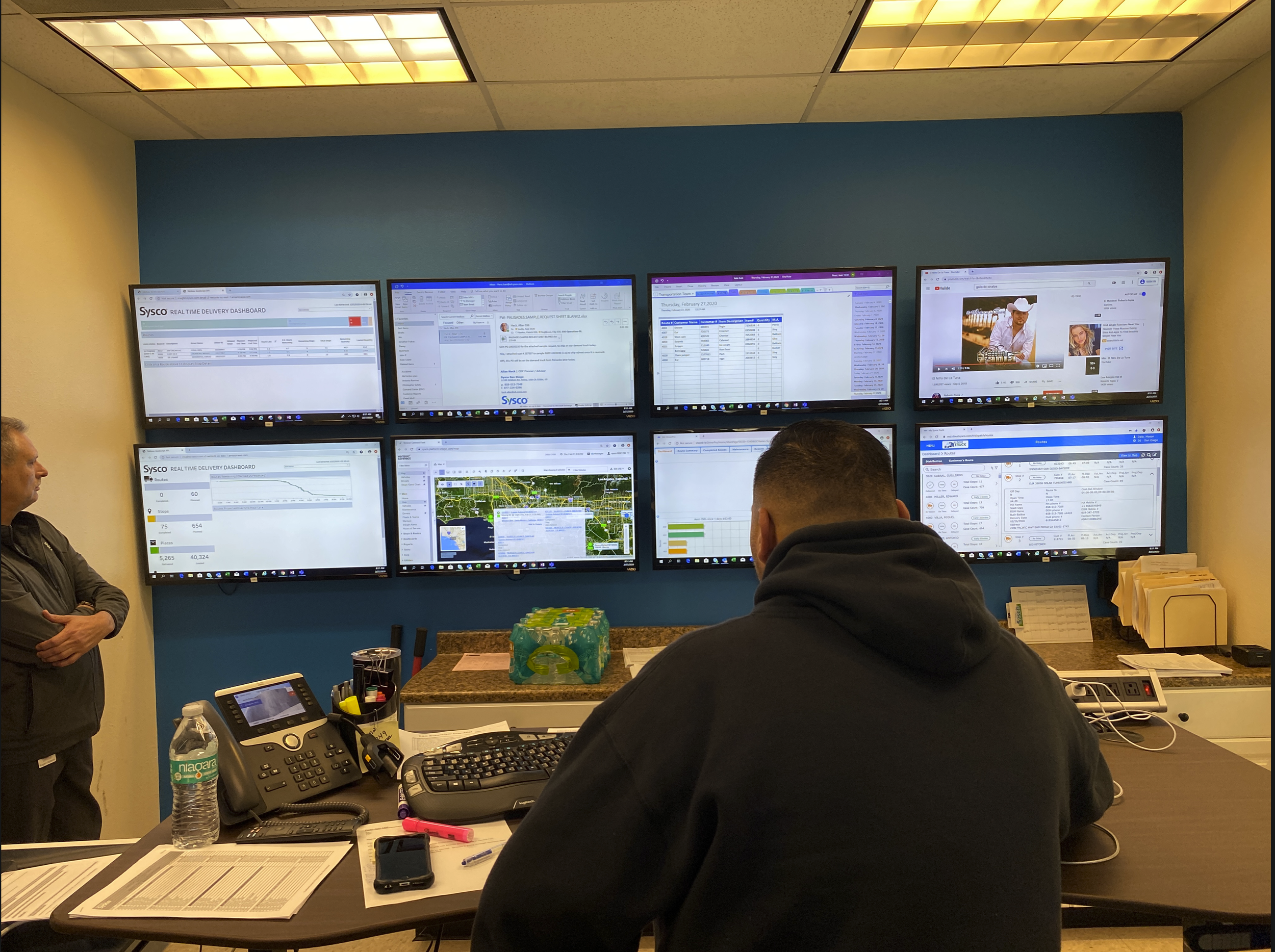
Field observation in a customer’s operating environment.
View field research photo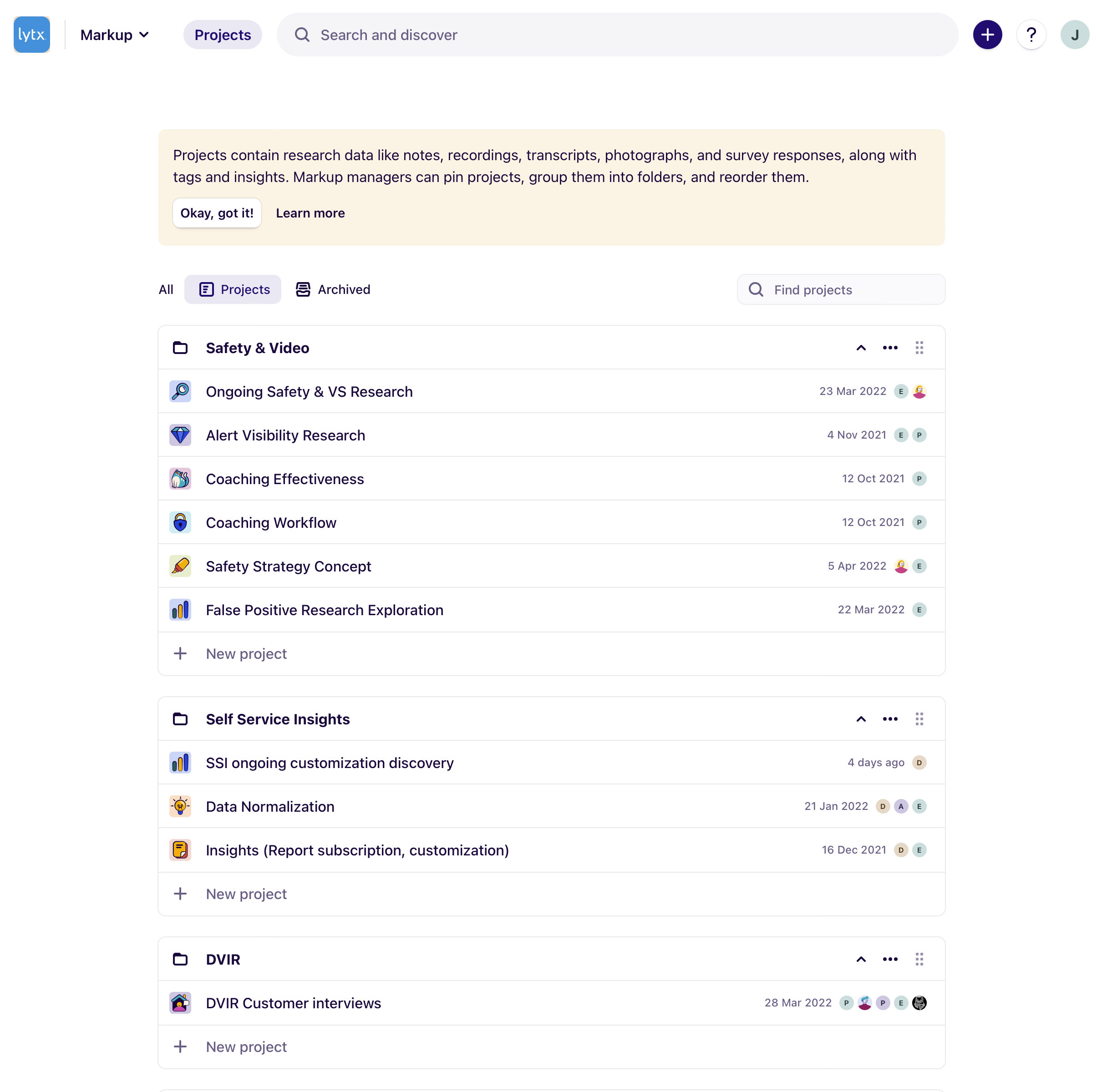
Research organized by product area and customer problem.
Explore the repository exampleUX artifacts / Supporting work
I directed the development of personas and end-to-end workflow maps across safety, fleet operations, compliance, and installation. I guided the team’s work and personally created selected artifacts. The collection covers both customer roles and the operational handoffs around the software.
Persona
A role-specific view of auditing, reporting, and driver support extends the research coverage beyond the primary coach and fleet manager.
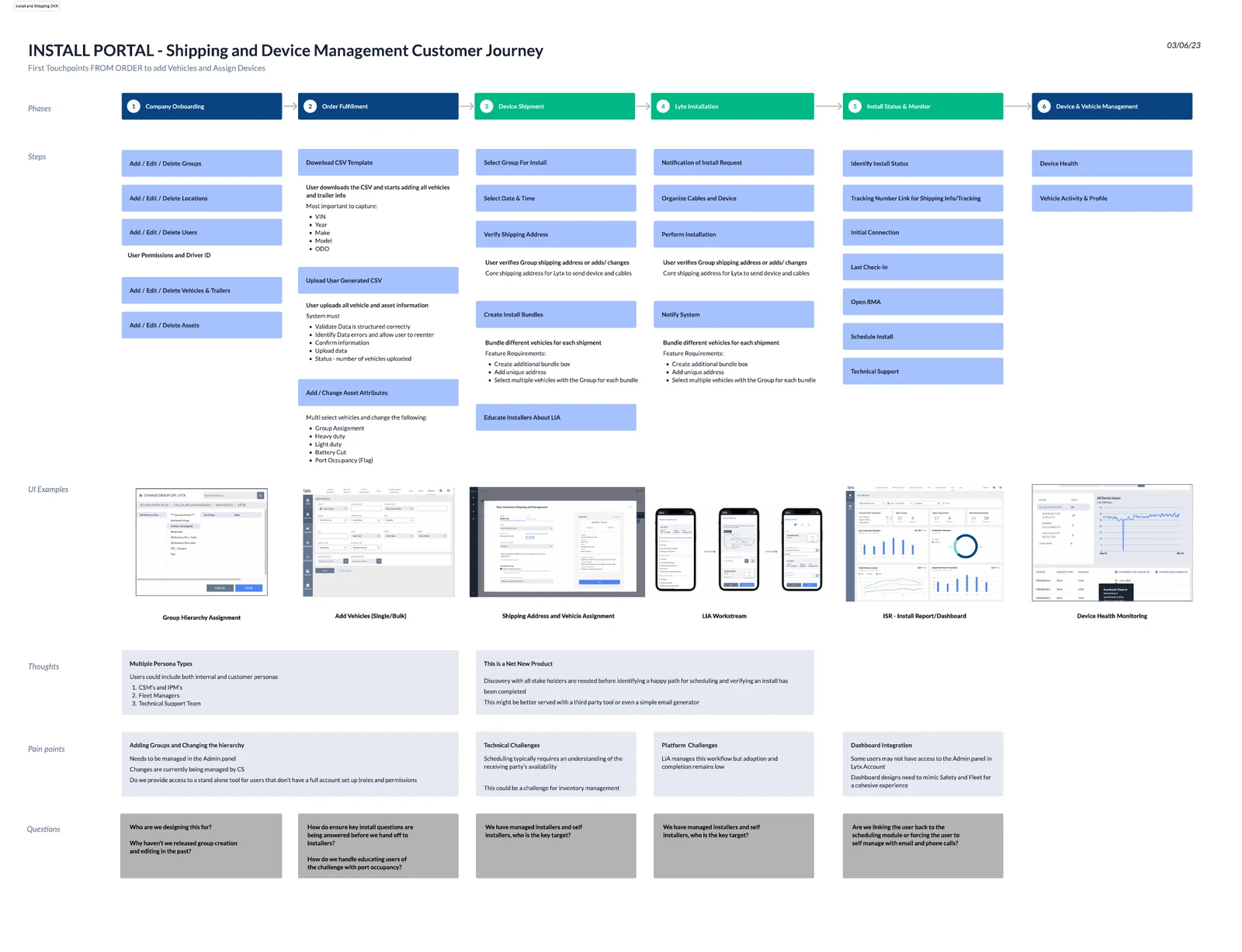
Service journey · March 2023
The service journey connects account setup, shipping, installation, and device management. Open questions and interface explorations make dependencies across roles visible.
05 / Integration
I led the enterprise migration from Amplitude and WalkMe, owning vendor evaluation and the selection of Pendo. Through that transition, Data Analytics and Technical Writing came under my leadership.
Integrating these functions brought four disciplines into one organization. Product design and customer research now sit alongside behavioral analytics and the information customers use to understand the product.
06 / Practice today
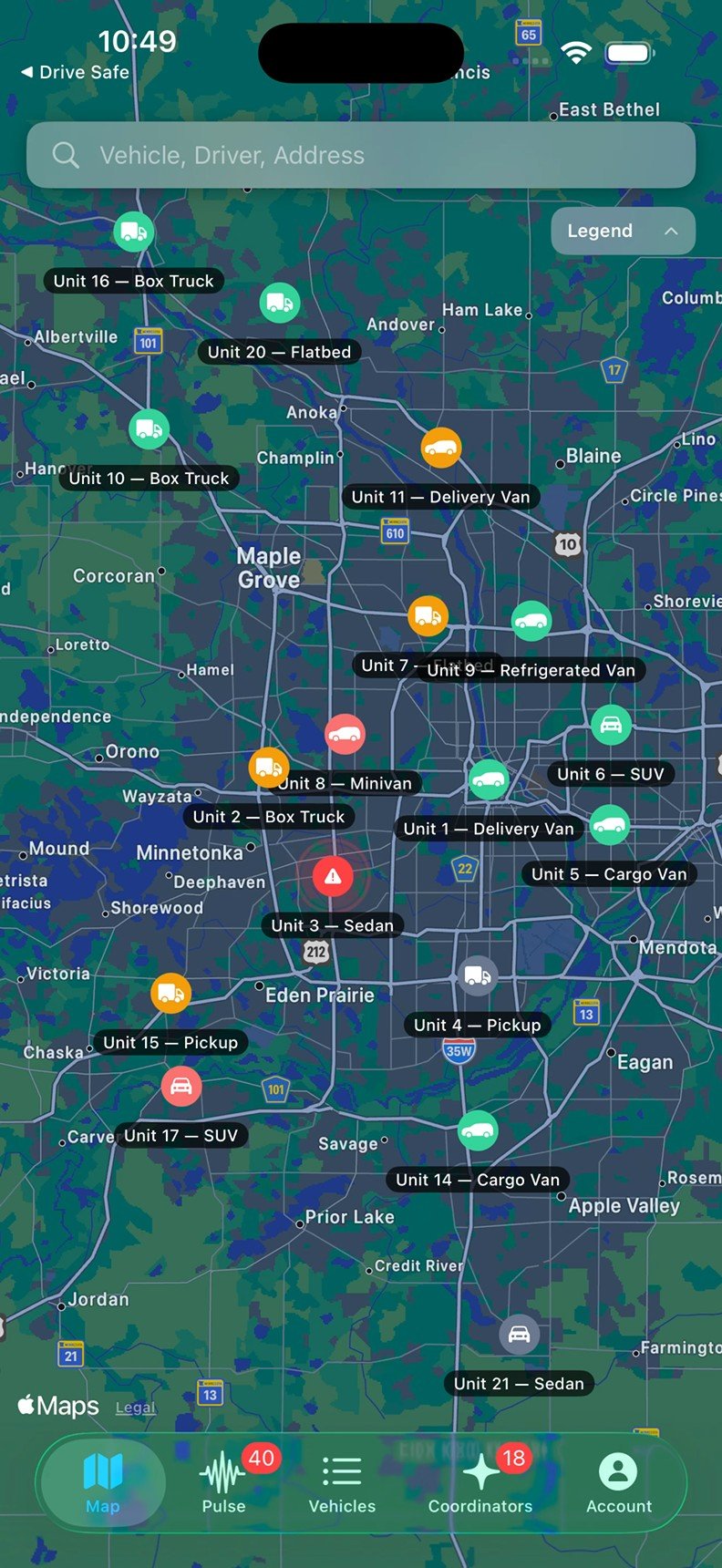
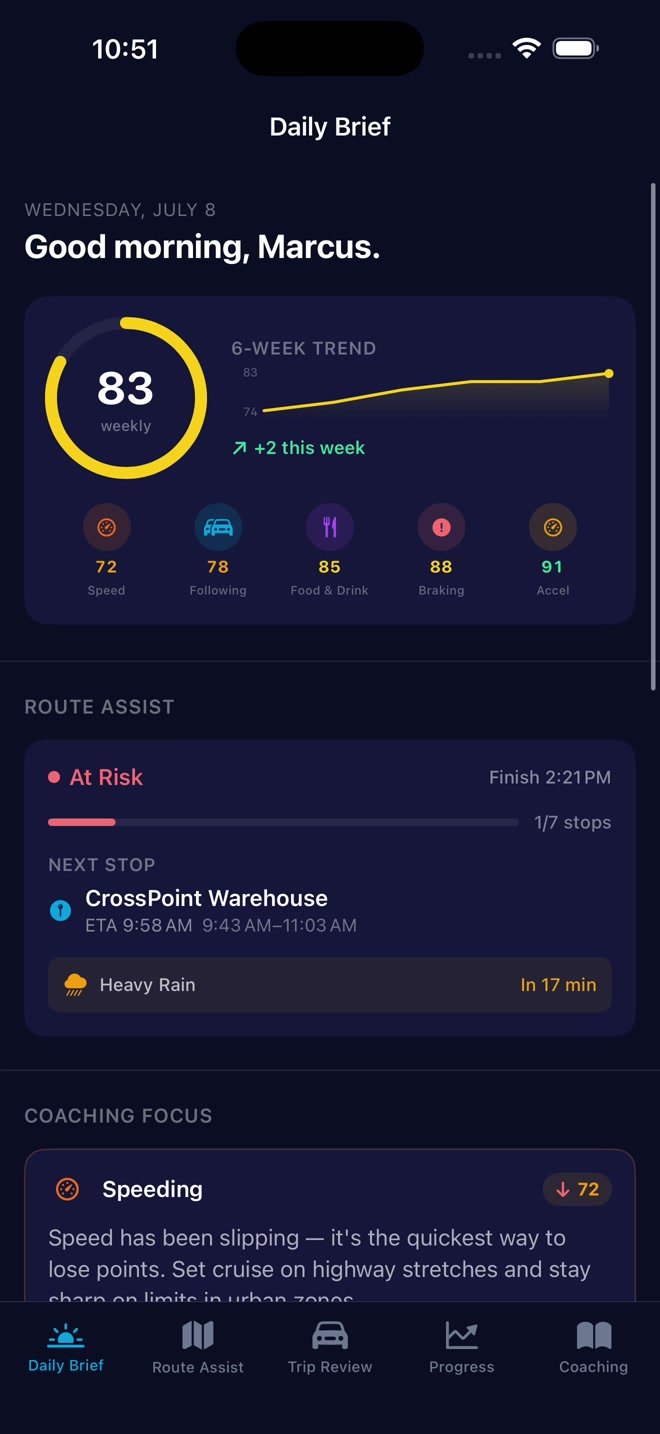
I established near-working software as the team’s prototyping standard, moving beyond static handoffs. That approach is influencing how Design, Product Management, and Engineering build together.
My own hands-on product work demonstrates the interaction detail this approach makes possible. I am also implementing an enterprise AI toolchain across design, research, analytics, and technical writing while maintaining ongoing delivery commitments.